
Last week, the gaming world mourned the loss of Rebecca Heineman — a legendary programmer and designer, and one of the co-founders of Interplay. Her credits include classics such as The Bard’s Tale (1985) and Wasteland (1988). Her work helped define the look and feel of Western RPGs for decades to come.
But you will not find Rebecca’s name in the credits of her earliest contributions, for reasons that should be evident from the title of this article.


Rebecca spoke openly about her life, which is why I feel comfortable discussing it here. For other developers, I will only refer to what they have chosen to share publicly. I felt it was important to write this piece for one particular reason:
In the current political climate, we have seen a great deal of negativity directed at transgender people. I could not scroll through the comments on news of Rebecca’s death without encountering slurs and insults — an appalling thing to do at any time, but all the more so towards someone who lived quietly and brought so much joy to others.
Rebecca gave the world a great deal without expecting acceptance in return. None of her games, even after her transition, called for representation or explored themes of gender.
The news of her passing was made all the sadder by its timing: she discovered an aggressive form of cancer shortly after the death of her wife: Jennell Jaquays — also a transgender game developer — who contributed to series such as Quake and Age of Empires.


I consider myself a cisgender ally, and I feel deeply for those who experience gender dysphoria. It is a difficult condition to explain to those who do not feel it. Being dysphoric is not a choice — who would willingly choose such suffering? And yet, transition remains the most freeing and affirming path available to those who suffer from it.
Rebecca and Jennell were not alone; for as long as gaming has existed, transgender creators have been part of its history, often without realising it themselves at the time.
Creators like Jamie Fenton have been active since the 1970s; Danielle Bunten Berry, creator of M.U.L.E. (1983), inspired Nintendo’s Shigeru Miyamoto; Cathryn Mataga helped make Neverwinter Nights (1991), the first graphical MMORPG; Veda Hlubinka-Cook aided in the development of Prince of Persia (1989); and the list goes on.


It is fitting that I mention Prince of Persia, as its creator Jordan Mechner (a cisgender man) originally intended to become a screenwriter — gaming was not yet the thriving medium it would become. Fast-forward to today, and the modern industry has no shortage of transgender people making games.
Things are steadily improving. In 2015, the world saw the first version of Maddy Thorson’s Celeste (2018). In a long-overdue act of representation, the game’s protagonist Madeline became one of the first transgender characters to be widely recognised. Although Celeste does not centre on Madeline’s identity, her struggles with anxiety were inspired by Thorson’s own experiences with dysphoria.
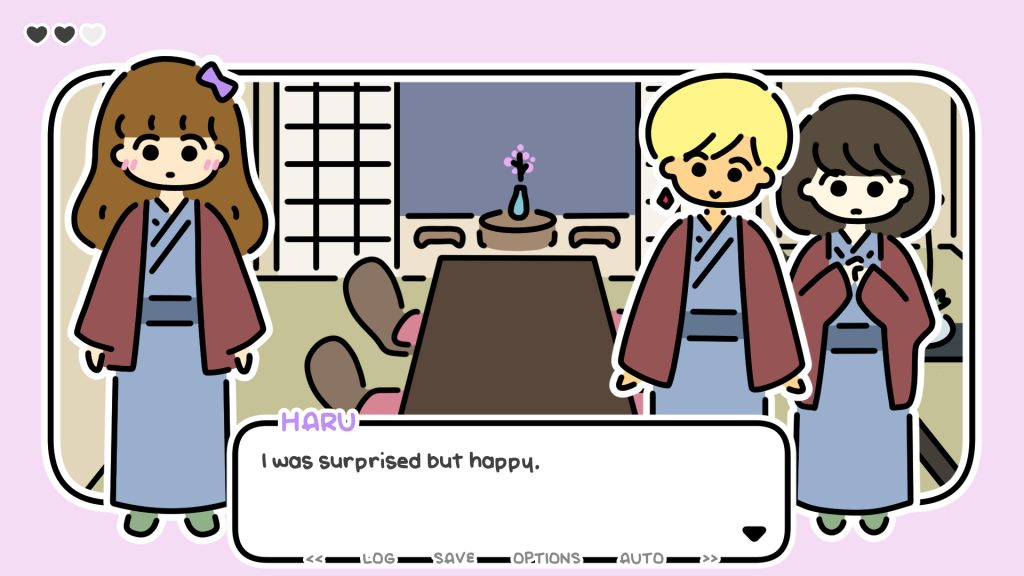
npckc’s One Night, Hot Springs (2018) and its expanded collection, A Year of Springs (2021), gently portrays the worries and emotional difficulties that often accompany living as a transgender person.

As mentioned earlier, it can be difficult to relate to gender dysphoria if you do not experience it firsthand. Perhaps for this reason, we do not see many games outside the indie scene exploring transgender experiences. Frustratingly, this lack of understanding makes it harder to create thoughtful representation.
In 2017, Minecraft (2016)’s creator Markus Persson made several transphobic comments on X (formerly Twitter). It is ironic, then, that under Microsoft’s stewardship the game now features soundtracks composed by Lena Raine, a transgender woman. This is the kind of resistance we need — compassion through creativity. Perhaps this is the path that will one day lead to genuine acceptance.
And those of us who are not transgender can do our part too. Swery’s The Missing: J.J. Macfield and the Island of Memories (2018) includes a heartfelt message to people struggling with dysphoria; while it can feel clumsy at times, the intent is clear.


I hope for a future in which people can live their truth free from prejudice, where marginalised groups are neither scapegoated nor demonised. I hope that those who are most critical will come to respect the humanity of others. Tolerance is not too much to ask.
I realise that much of this article centres on transgender women. This isn’t intentional exclusion; reliable sources on transmasculine creators were harder to find. I want to be clear that everything I’ve written extends with equal respect and recognition to transgender men as well.
Rest in peace, Rebecca. Thank you for all you’ve done.
