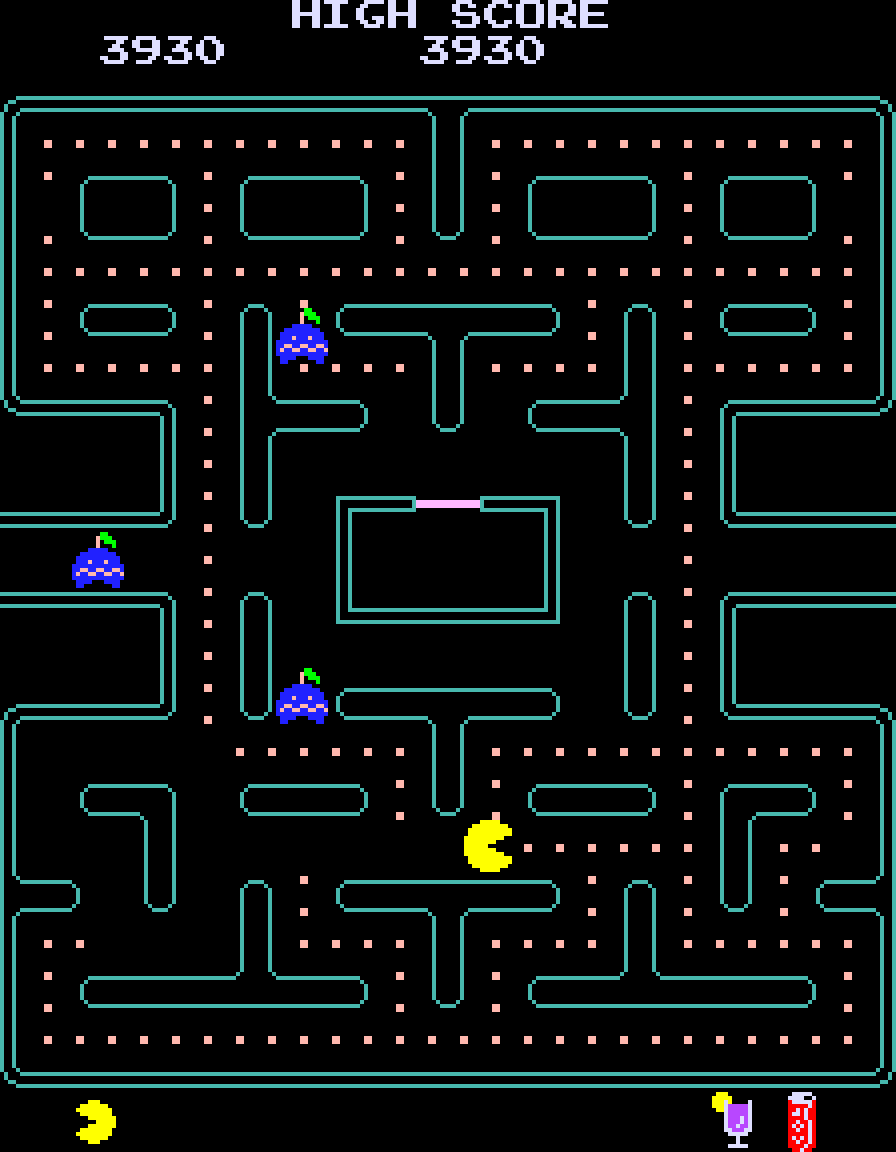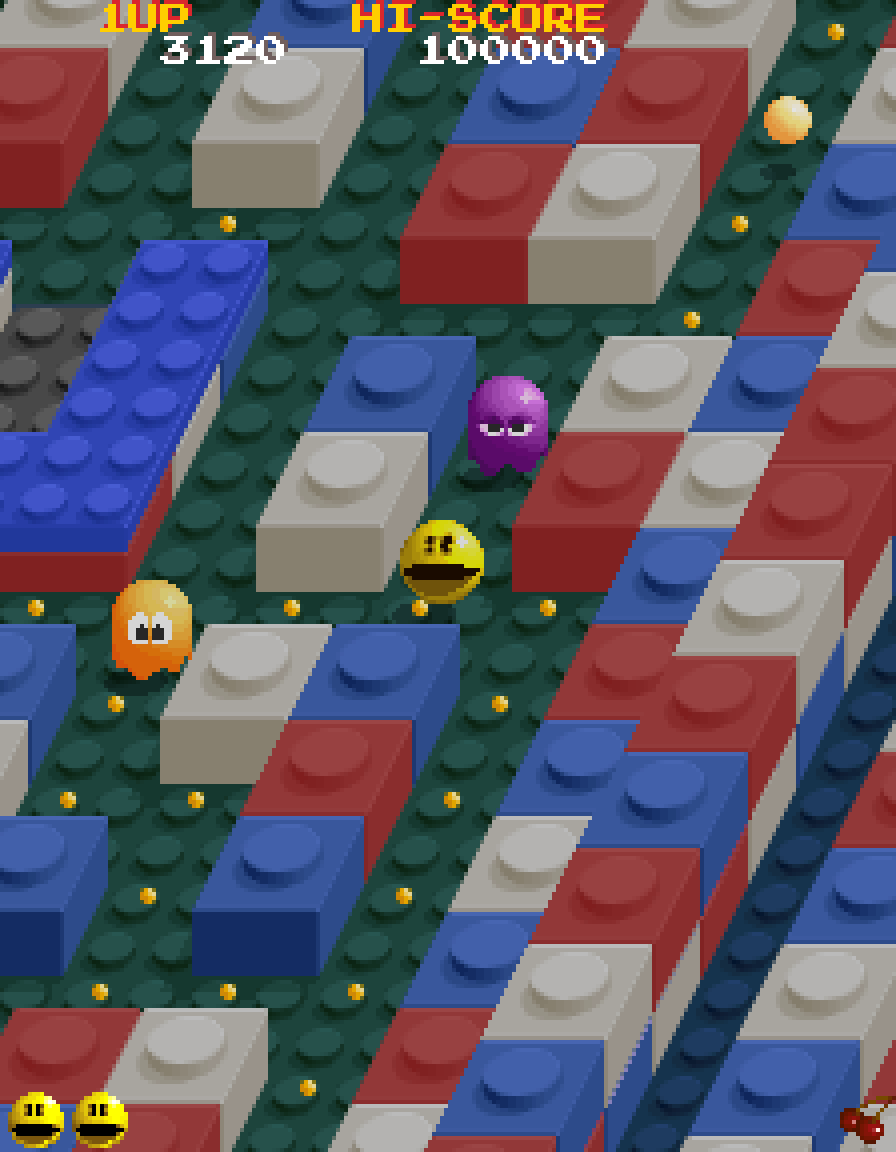

List makers in their ignorance will tell you that there are a thousand games you must play before you die. As any educated person should know, art and enjoyment are subjective, so there is no verifiable way to rank games based on objective quality.
Nah, I’m just kidding. The best game ever made is Pac-Man.

Namco was already making a scene with its Space Invaders-inspired Galaxian (1979). The trouble is (according to the story) arcades were dingy places inhabited by smelly boys. Toru Iwatani was tasked with finding a way to bring women to the arcades.
Someone must have neglected to tell him that men and women are more alike than unalike. A lot of our interests and biases are based on social conditioning, which we adopt even subconsciously because humans are a social creature and fitting in is integral to our survival… but I’m not Yuvah Noel Harris so don’t take my word for it.
Anyway, his research concluded two things: women like food (I never would have guessed; as a man, I despise food) and women don’t like combat. His research clearly didn’t take him to an all-girls secondary school.

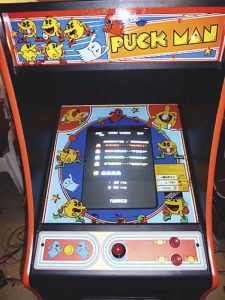
I don’t mean to rag on Mr. Iwatani. I wouldn’t have a quote from a Shmuplantations interview 🔗 on my About page if I didn’t respect him. It’s just hilarious in hindsight and shows a cultural perspective which I’ve never fully understood. I may even be in the wrong here because Pac-Man did drive women to arcades… along with everyone else.
Everyone knows the goal of Pac-Man. It’s obvious just from observing it for a few seconds: you are a pizza-shaped character defined by his large mouth and must consume everything. Avoid ghosts because everyone knows ghosts are bad. Sorry, grandma.
It probably sounds so simple that no designer could mess it up. You’d be wrong, however. Pac-Man has several mechanisms under the hood to ensure you’re having a good time. For starters, Pac-Man is always in motion, which not only maintains the game’s pace but also means that you only need to guide him when turning. You can even pre-program these turns in advance, so precision is not required.

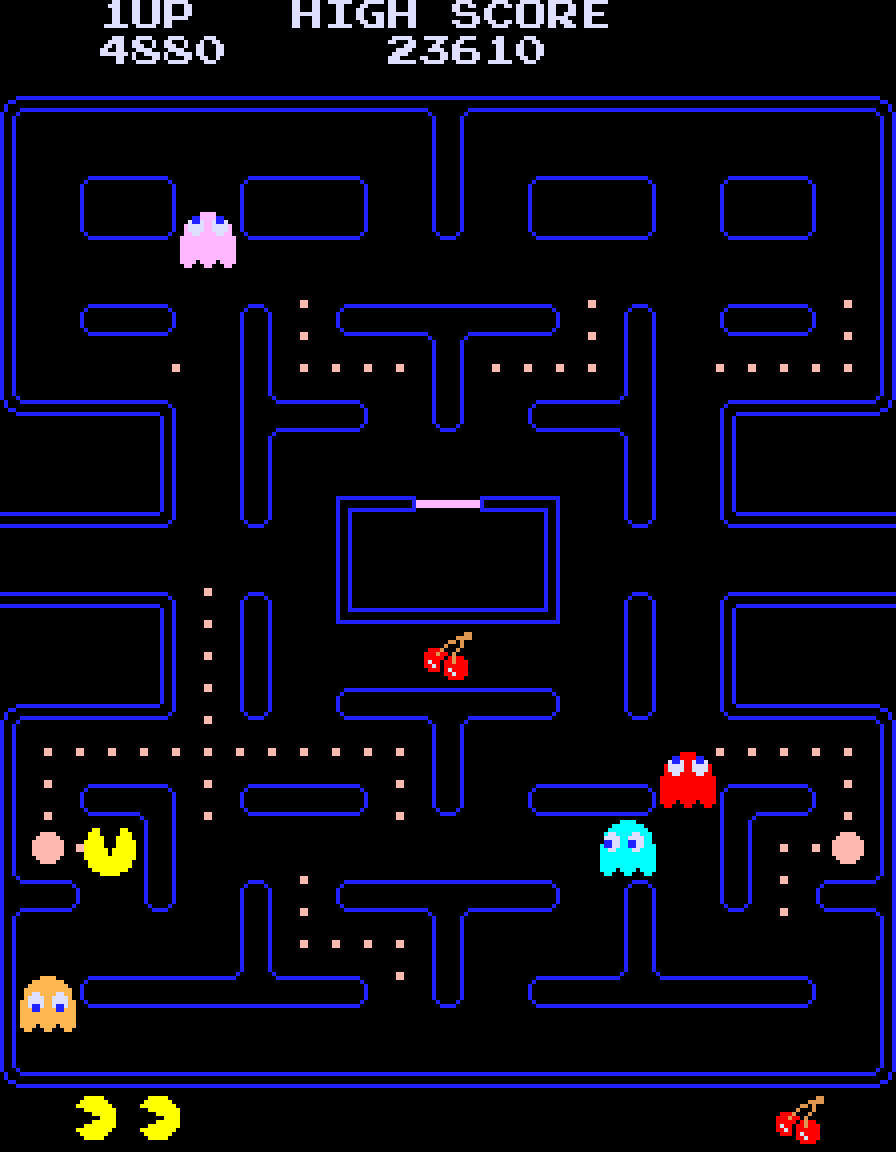
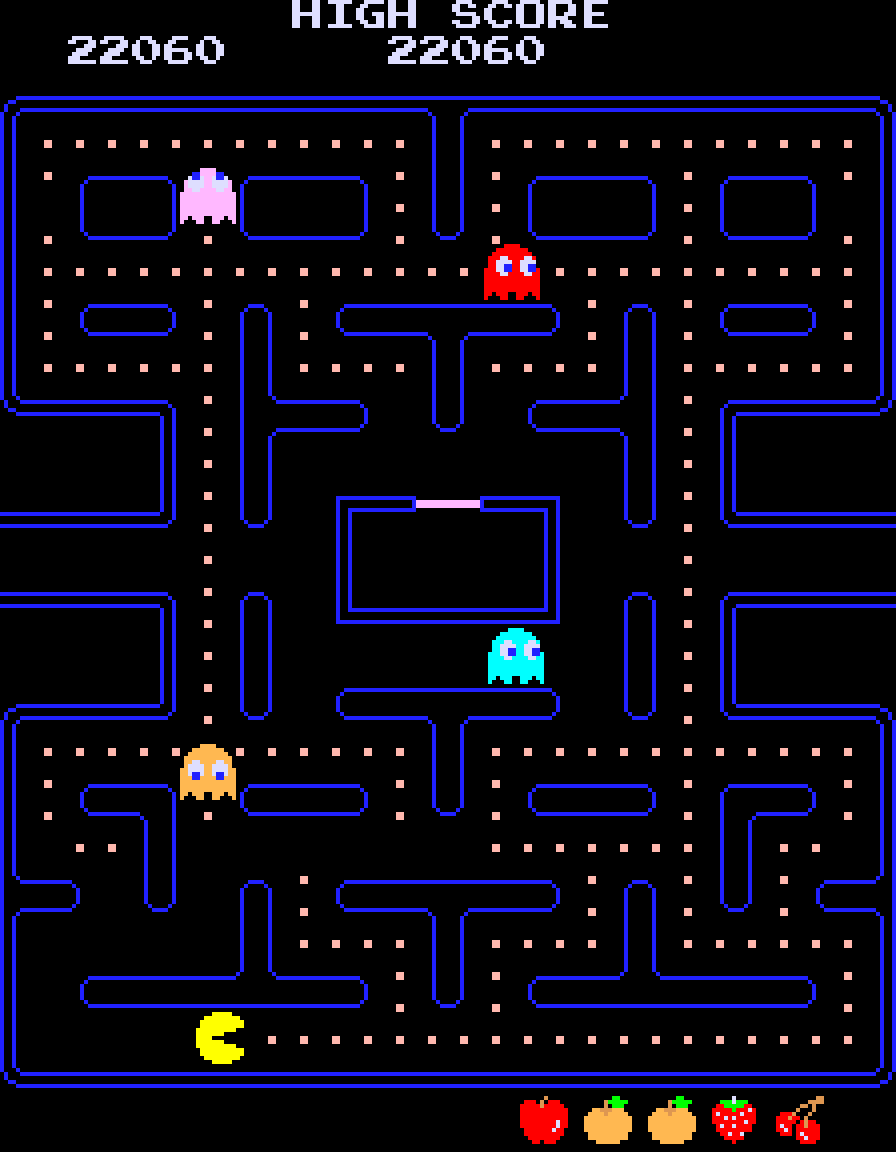
But Pac-Man‘s true stars and the defining feature of the whole game are the ghosts. Contrary to first impressions, their behaviour is not random nor do they blindly chase Pac-Man. In fact, all four of them have unique behaviours and learning to predict these is instrumental to mastering the game.
The original Japanese version has hints on their behaviours via their names in the game’s attract mode, but this was lost in any subsequent English translations. Here’s a breakdown:
- Red: They will beeline towards Pac-Man via the most direct route.
- Pink: They try to predict where Pac-Man will be two steps ahead of his current direction.
- Blue: They try to ambush Pac-Man by reading Red and Pink’s current positions.
- Orange: They beeline towards Pac-Man but will scatter (see below) when too close.
That’s only while they’re in “Chase Mode”. Periodically, they will enter a “Scatter Mode”, which sends them to the four corners of the stage. This grants you a brief reprieve but also makes exploration quite dangerous.

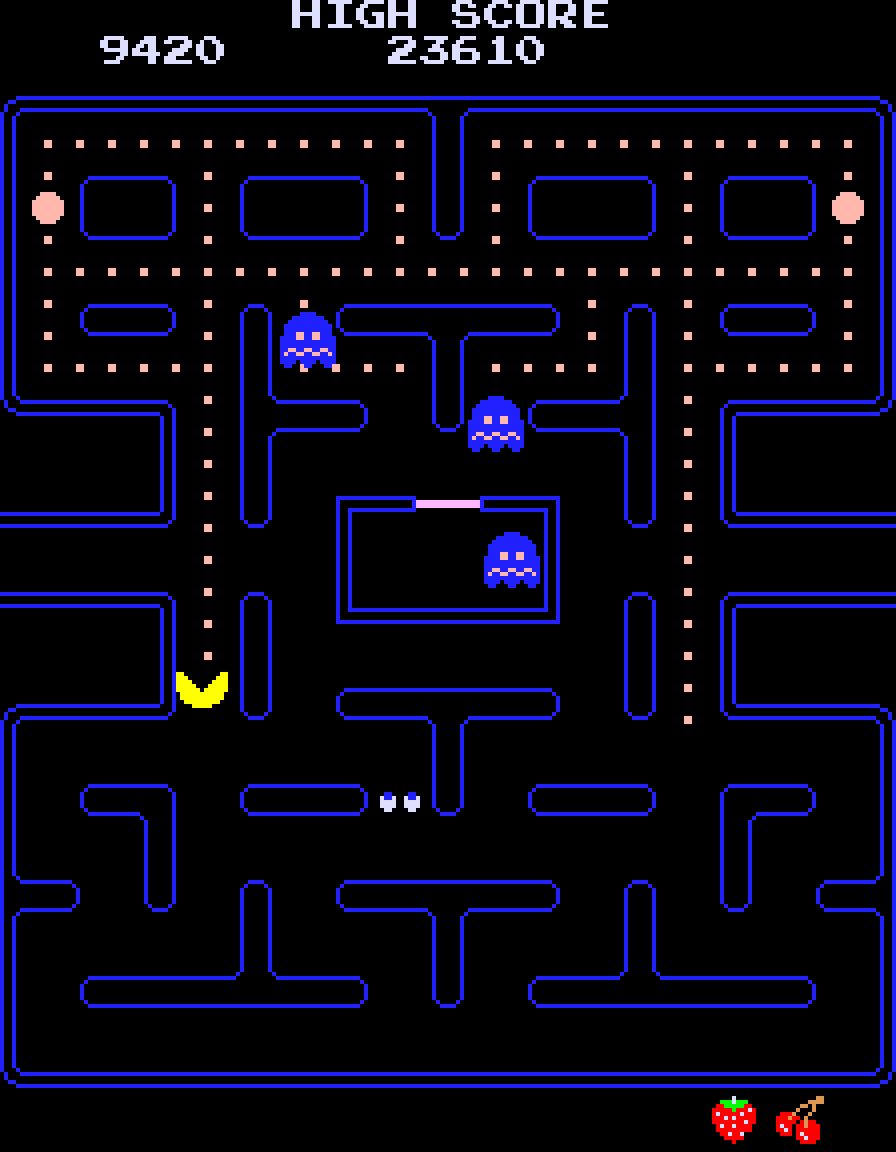
An additional breather is available in the form of Power Dots (or Power Pellets or Energisers, whatever), which make Pac-Man momentarily invincible and allow him to eat the ghosts. While vulnerable, the ghosts will turn blue and sluggishly try to run away. Because eaten ghosts quickly return back to their normal state, beginners may think that dragging out the invincibility state is the key to victory. It’s not.
Being a score-based game, Pac-Man has no ending and collecting all of the dots does not equal progress. A skilled player can easily obtain the collected total of someone who made it far into the later stages without travelling nearly as far, and eating the ghosts is instrumental to this.
When you pick up a Power Dot, the first eaten ghost awards 200 points; the next 400, then 800 and 1600. Since the ghosts will scatter once frightened, you’ll want them relatively grouped up before you eat the Power Dot. The added benefit is that extra lives are granted for reaching certain score thresholds, meaning that you’ll last longer too — unless the greedy arcade owner disables this feature.


There also collectible fruits which occasionally appear in the centre of the maze, but there are no dots to eat there, so you’ll be taking a detour for it. Doing so is recommended for reaching the highest scores but even seasoned players may forsake them at times.
It’s debateable but Pac-Man is considered the first video game with “cutscenes”. They aren’t just a reward, they cleverly serve as intermissions to let you catch your breath in an otherwise unpausable game.


Design-wise, Pac-Man might well be the perfect arcade game. It works well for a number of reasons: it’s objective and controls are intuitive, and you can invest as much or as little into it as you please.
Compare this to Donkey Kong (1981) and you’ll see how it trumps it: Donkey Kong requires you to understand its own rules, such as jumping physics and peculiar enemy behaviour (since when could barrels climb down ladders?)… and that’s what arcades needed: something to attract non-gamers while not being insultingly simple.
Later games like Angry Birds (2009) and Crossy Road (2014) succeeded attracting non-gamers but failed at adding complexity. The only games I’ve seen come close to bridging the gap between casual and hardcore games are puzzle games like Tetris (1989), Puyo Puyo (1992) and Puzzle Bobble (1994), but even those are not that simple.

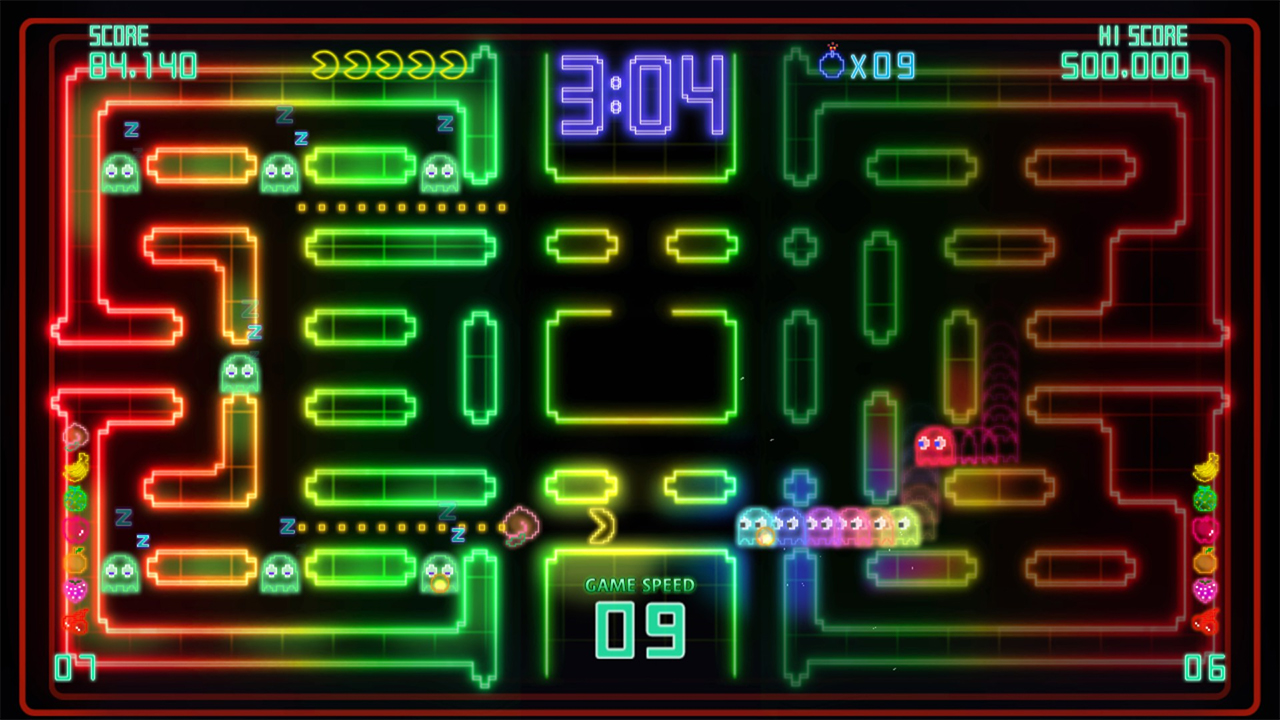
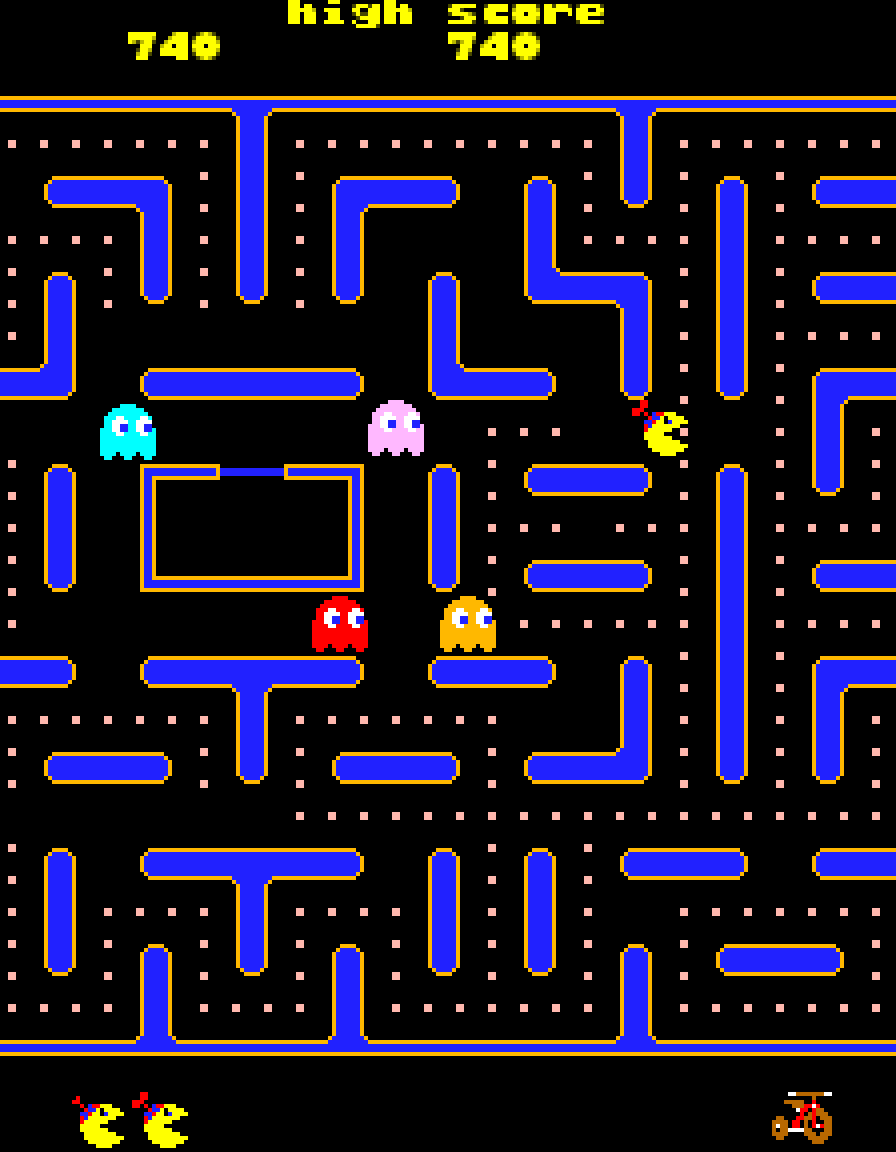
Later Pac-Man games would largely shake up the formula instead of improving on it. The only exceptions would be Ms. Pac-Man (1982) and Pac-Man Championship Edition (2007), which genuinely tried to address the flaws of the original game. Namco and Midway quickly capitalised on Pac-Man‘s success, with 1982 being the year of “Pac-Man Fever”, and the character would be seen everywhere.
Apart from its unsightly protagonist, Ms. Pac-Man is a solid improvement: it adds new maze layouts and roaming fruits. On the other hand, Championship Edition is functionally a new game with the same underlying framework, going back to square one on the game’s whole design.
If I wrote about Pac-Man‘s whole legacy, this article would dectuple in size. Suffice to say, Pac-Man has rightfully won its place as the definitive arcade game.