
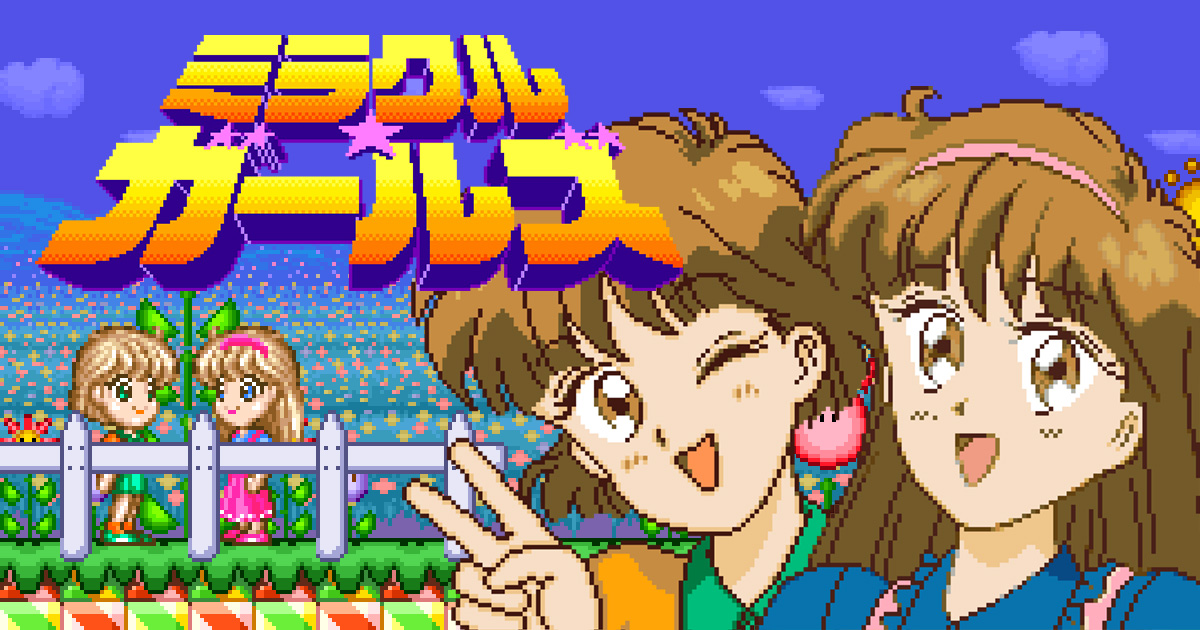
Note: Special thanks to RPGONE for the translated images.
Although I think gendered stuff is generally kinda dumb, I still enjoy the shōjo aesthetic — and why not? It’s cute, it’s brightly coloured, and on first impression, seems to focus largely on positive emotions (but never for long).
There were no shortage of games based on shōjo properties in the 90’s, which tells me they must have been somewhat successful. I think about “games for girls” released overseas at the time, like Barbie: Super Model (1992), and games like Miracle Girls and Angelique (1994) look like high art by comparison.
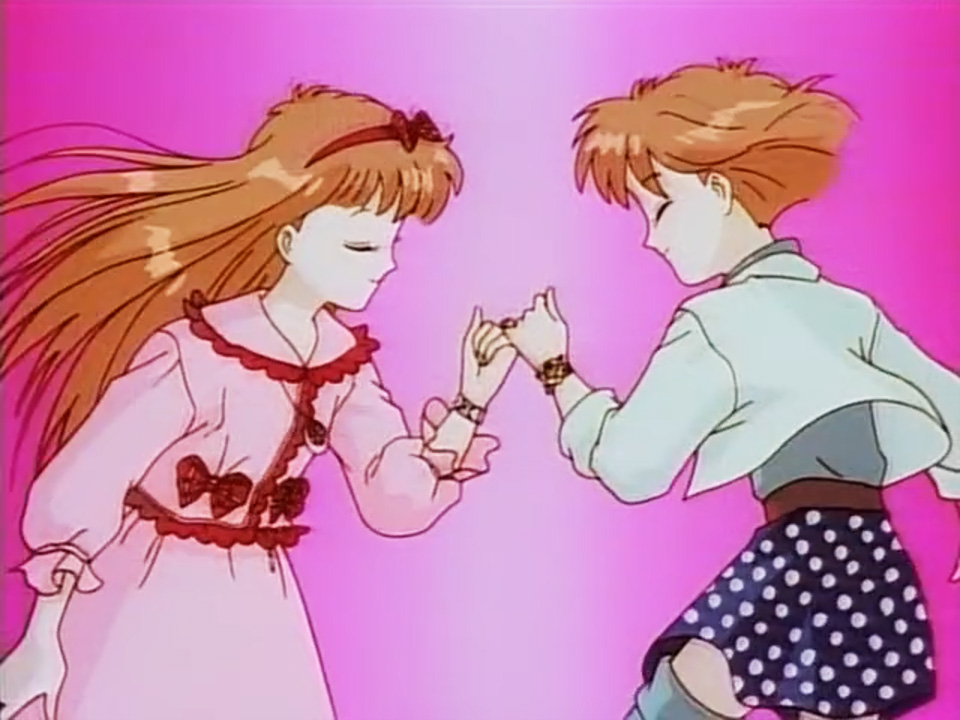

Miracle Girls is based on a manga series by Nami Akimoto. It’s about two twins, Tomomi and Mikage, who have psychic powers that are activated by linking pinky fingers. The video game is mostly based on the anime series, which changed a few plot details.
I remember when Masahiro Sakurai of Kirby’s Dream Land (1992) expressed a sentiment that some video games should serve as accessible entry points for new gamers. Miracle Girls comes to mind for its brevity and simple controls, and it’s a shame few games nowadays embrace this design philosophy.
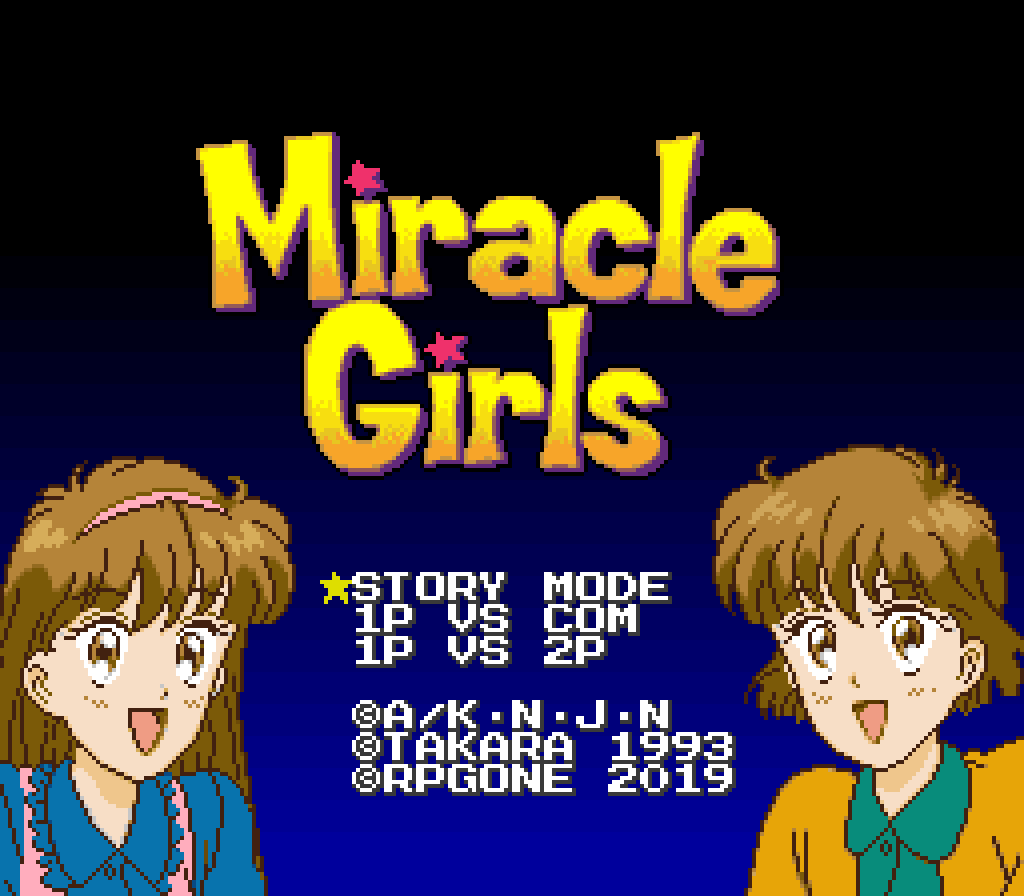

Although you’re given a choice of the athletic Tomomi or the demure Mikage, both characters control identically. They only differ in one aspect which I’ll talk about later.
Miracle Girls would have been at home on the NES/Famicom as it only uses two buttons: one to jump, another to throw candy. Candy can be thrown at enemies to momentarily stun them, allowing them to serve as stepping stones.
Get this: your projectiles travels in an arc but they don’t fly over enemies. You can even aim downwards! Wow! Actual designers were at work here!


Fine, there is one other button: you can perform a special attack by collecting a “bomb ball”, which throws candy all around you. It’s not terribly useful, though.
It makes good use of the license by having moments where your twin sister telepathically guides you. She’ll be present in the screen’s corner during some segments, telling you whether to step on “red” or “white” through digitised voice clips.


She’ll also appear at certain points to link pinkies with you, allowing both of you to fly or teleport. These moments are always cinematic, seizing control from the player, and seem to differ slightly depending on the playable character.
Rather than boss fights, Miracle Girls opts for minigames, which are unique to each character. Where one character might play a matching game, another will play whack-a-mole, and so on. This is the main distinction between each character and it’s nice to choose the challenges you’d like to face — not that either is very difficult. True to their personalities, Tomomi’s games require more dexterity while Mikage’s are more cerebral.
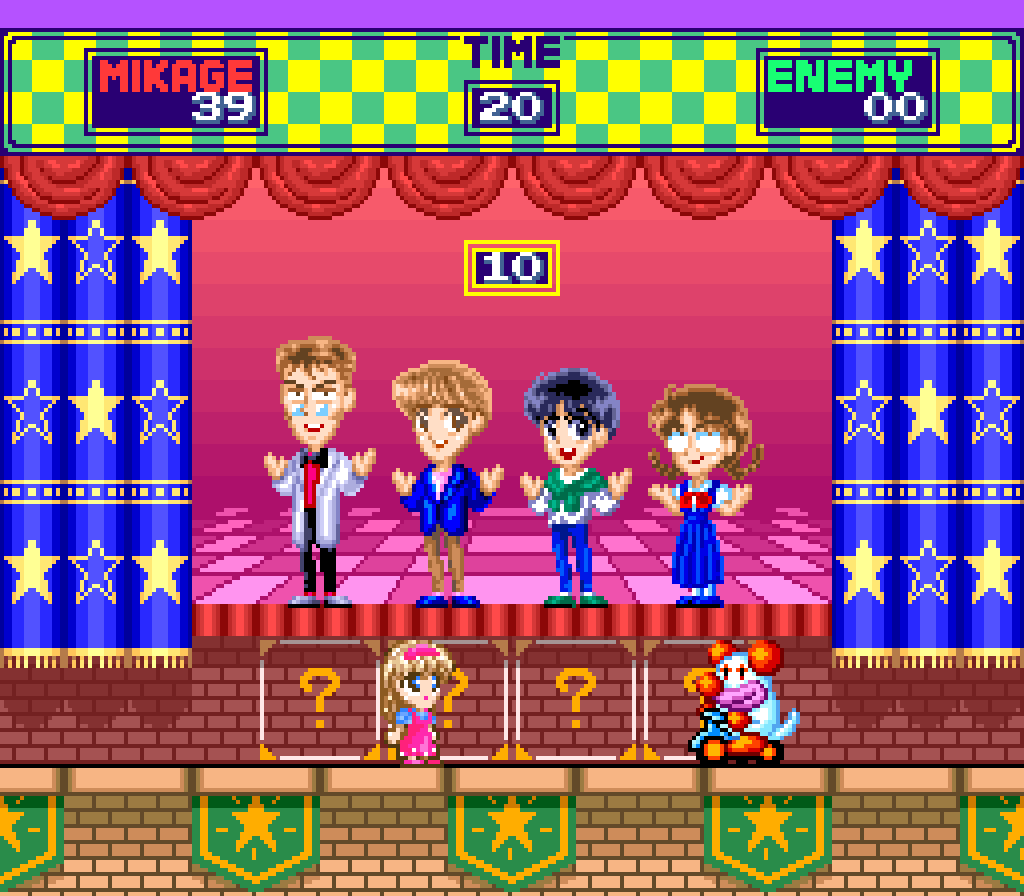


Every world is colourful and sugary sweet, sometimes literally, but never in excess and it never stops being fun to look at. The developers made good use of the hardware, filling every stage with little visual quirks despite the game’s relatively simple design. The stages are not imaginative by any means, but they serve their purpose well.
I know I praised its brevity earlier, but Miracle Girls really does feel like it ends too quickly. The final “battle” is a series of minigames played against a witch — except not really, since she doesn’t appear herself, instead repeating the same minigames you’ve already played against previous bosses. Something more creative could’ve really stuck the landing here.


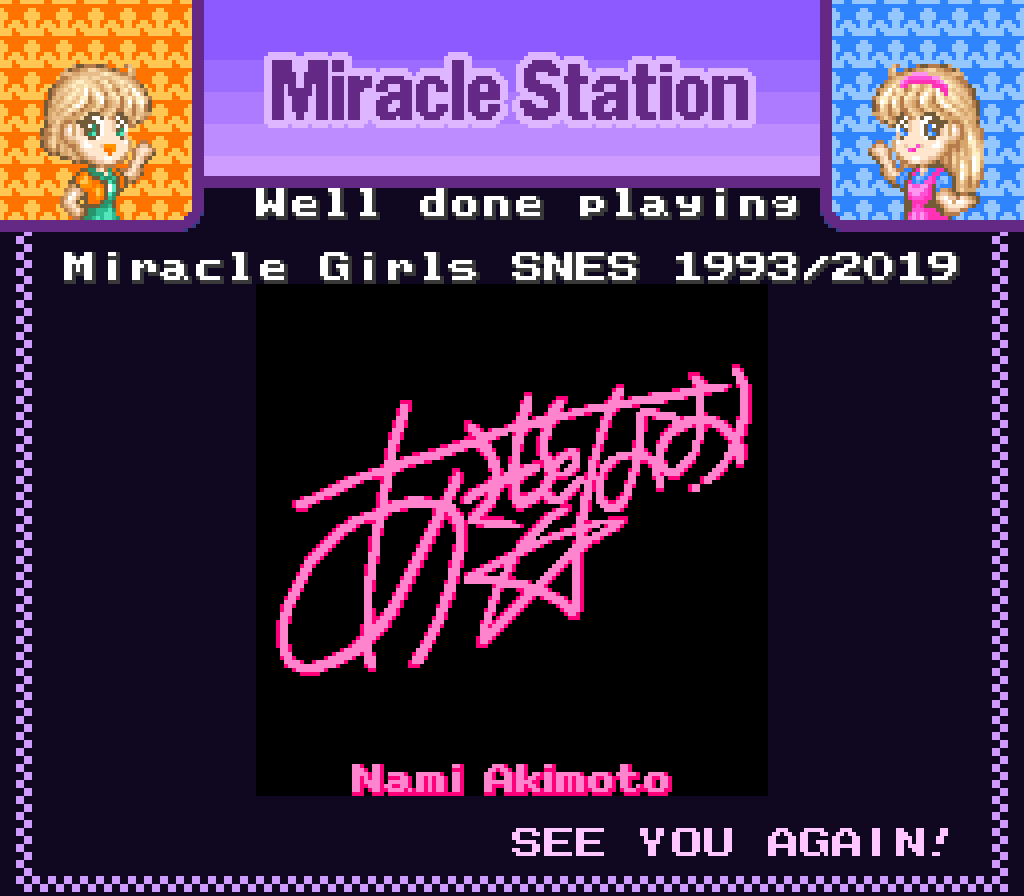
Between each stage, you receive a recap of the duo’s adventures and even a piece of advice from the author, Nami Akimoto, herself. I’m not sure how involved she was in the production of this game but her signature appears at the end of the credits… or this may have been an addition by RPGONE; I’m not entirely sure.
Other power-ups grant invincibility and such, and while these are fun to use, the game is never difficult enough to warrant them.
There are several hidden bonus stages to find, usually with fun-but-pointless things like a horoscope reader, which lends the game some replay value.


This game is adorable and definitely something I’d recommend to fledgling gamers. Modern controllers can have up to twenty buttons and many games try to find a use for all of them, so it’s nice to revisit games like these and remember that you can make the most of very little.
As a child, I recall playing a Ninja Turtles game for the Game Boy and excitedly calling my cousin to tell him that I’d beaten the first boss. It wasn’t a difficult task at all, but it was a lot for child-me, and that’s okay. He deserved to have fun too.

All this and not once did I answer whether it’s a faithful adaptation of the source material… ha ha, no, not even slightly.