
Every success spawns imitators. Atlantis no Nazo or “Mystery of Atlantis” tried to run in Super Mario Bros. (1985)‘s shadow and has remained in that darkness ever since. This shouldn’t be surprising since Sunsoft also made the infamous Ikki (1985) the year before.
It sets you up for disappointment from the get-go: the box boldly claims that it “beat Super Mario!” and has even more levels, offering 101 over Mario‘s scant 32. The problem is that every level is very short and has practically nothing in it.
Except one-hit hazards. It has plenty of those.
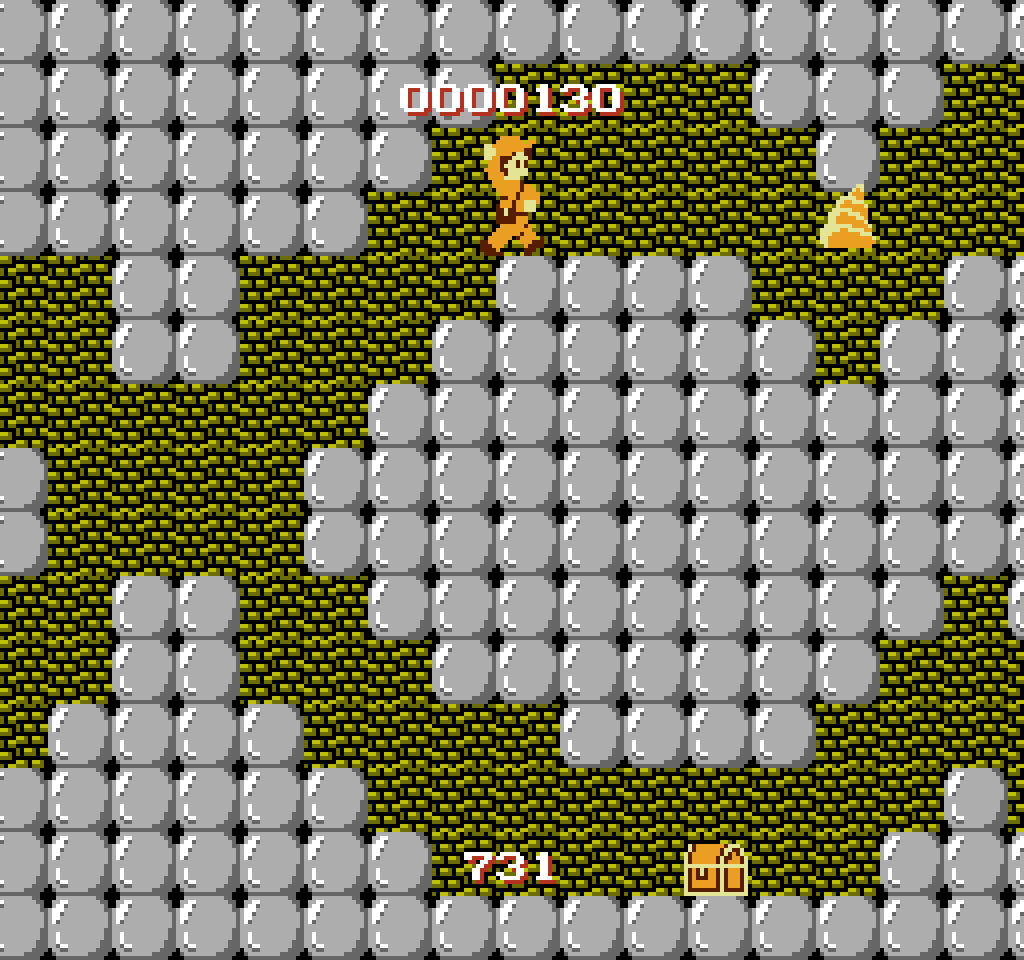


The hero is a plucky, young adventurer named Wynn. An ironic name. He perishes to anything by mere touch and his firecracker weapon doesn’t hurt anything larger than a wasp on impact. Rather, it detonates after a few seconds, requiring timing and adequate distance. Naturally, the explosions can hurt him too.
Most platformers at the time gave you some degree of mid-air control and sure, Atlantis no Nazo is no exception… but it’s so ineffective that you’re essentially married to your jump. You also accelerate in an instant, making it excruciatingly difficult to perform slow jumps or fall on platforms beneath you.
Wynn is an incredibly wimpy protagonist. All he has going for him versus the hero of Spelunker (1983) is that he takes no fall damage — not that there’s anywhere to fall from anyway, because every level is horizontal.


It does have one thing over Mario: it allows you walk backwards through levels. This is somewhat useful because the game is “non-linear”, expecting you to navigate its cyclical and inconsistently difficult zones. There is no option to continue when you die either, so you’re back to square one every time.
If I can praise just one thing, Sunsoft did try to make all of its levels different, whether that’s remixing the palette or throwing in enemies from different environments. It’s not much but it’s less repetitive than Mario‘s limited stage types.
Now back to hating: this game is ruthless and has the audacity to tout this as a feature. Obviously it has a time limit, too. If I was Wynn, I’d just let Atlantis remain undiscovered.


So if Nintendo’s golden boy has size-changing mushrooms and invincibility stars, what does Sunsoft’s third-rate understudy have? Let’s take a look:
- Star: Temporary invulnerability.
- Clock: Makes the time limit decrease slower.
- Light Bulb: Attached to what? Periodically illuminates a dark room, which your weapons also do, so…
- Shoes: Lets you walk on clouds. I think I’ve walked on exactly two clouds while taking these pictures, since most of the game is indoors.
- “S” Symbol: Makes firecracker explosions clear the whole screen.
- “2” Symbol: Doubles the point value of most things.
- “Up” Symbol: Gives you points when you press Up. Why??
- Microphone: Yelling into the second controller’s microphone will freeze enemies. So if you hear what sounds like a seagull with a panic attack, someone might be playing Atlantis no Nazo.


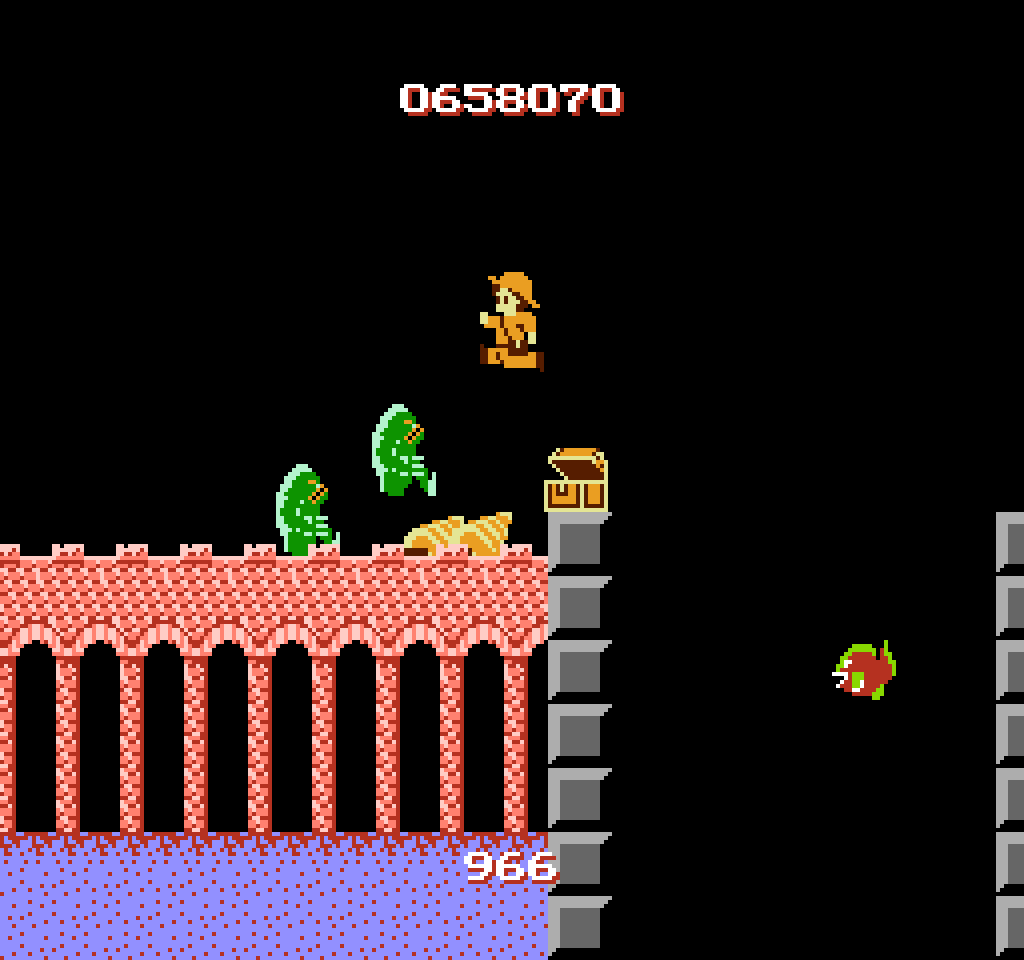
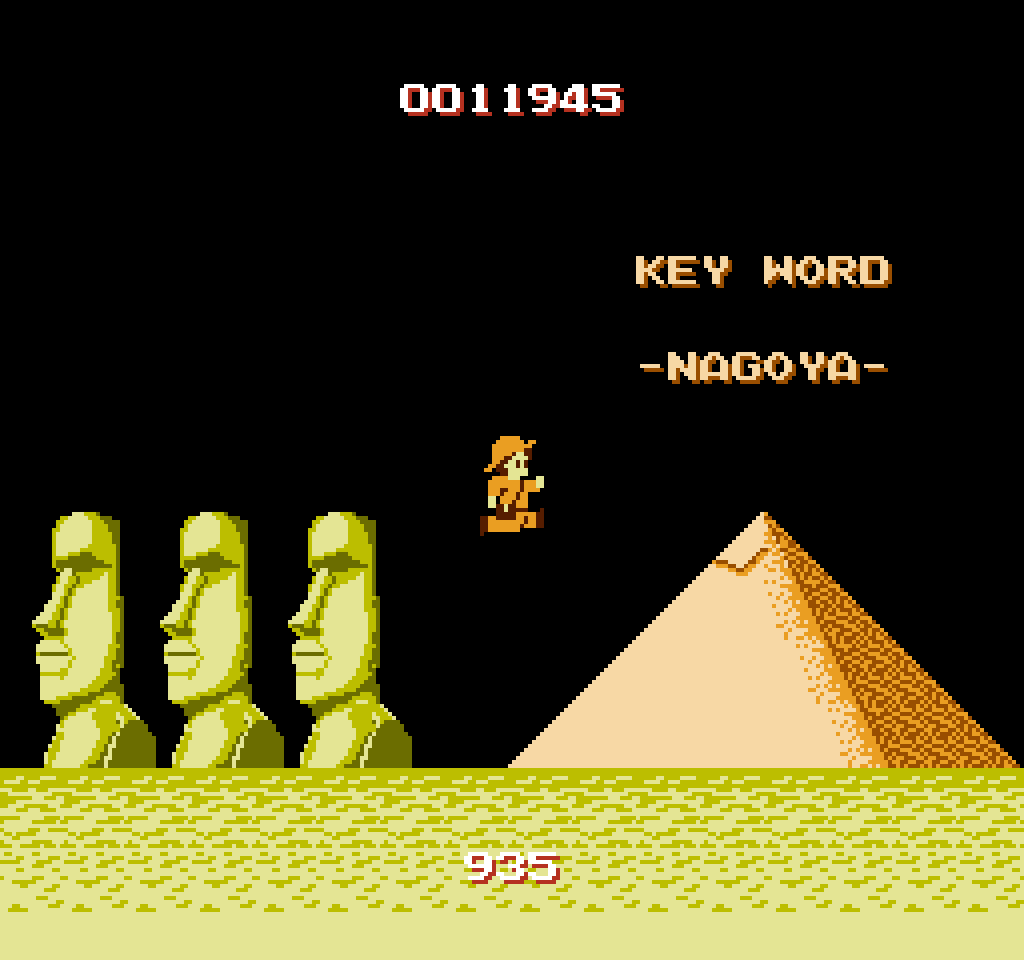
So what is the Mystery of Atlantis? Is it one of the many hidden rooms, like the black hole of guaranteed death or the seizure-inducing epilepsy chamber? Is it the pyramids and moai in what’s supposed to be Plato’s philosophical strawman? Is it the demon keeping Wynn’s master captive, who also happens to be the protagonist of Ikki? I didn’t mention that sooner because I don’t care.
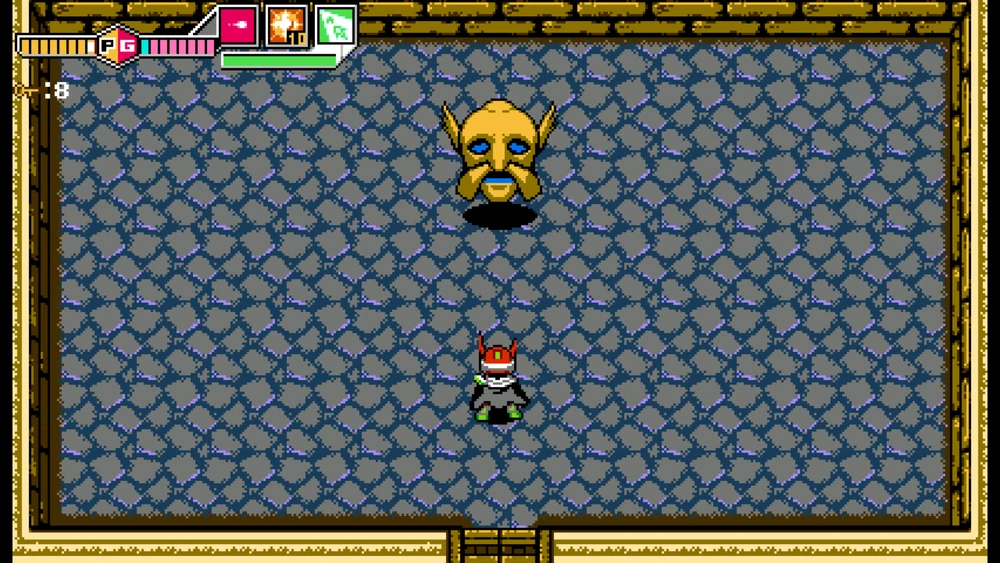
The demon, Zavira, is a stationary head who only ever hurls fireballs left and right. Once you’ve defeated him by touching his jewels, your freed master laughs at you. There are no credits and you can still move around. Now I get it: the mystery must be why the hell I played this.


I guess this is a score-based game (unless you find the game-breaking “Up” symbol) since reaching the end is all but impossible, so it’s really great that treasure chests award points ranging from 1 to 1,000,000. You’d think their points equate to how hard they are to find, but nope. Success really means nothing here.
Here’s the crazy thing: I actually enjoyed my time with Atlantis no Nazo. No, really! It’s a genuinely fascinating curiosity, like an example of everything you shouldn’t do with a game. I even own a physical copy of it. It’s like a low-res car crash that my eyes are glued to like it owes me answers.

As a designer who’s dissected this genre to death, this thing goes against everything I appreciate about platform games. Sunsoft would go on to create good platformers eventually but man, what a rough start.
The truly bizarre thing is that Sunsoft actually seems proud of this. They’ve constantly ported it throughout the years, presumably to spite anyone who enjoys video games, and even convinced Nintendo to include it on the Famicom Mini. Now that’s a mystery.
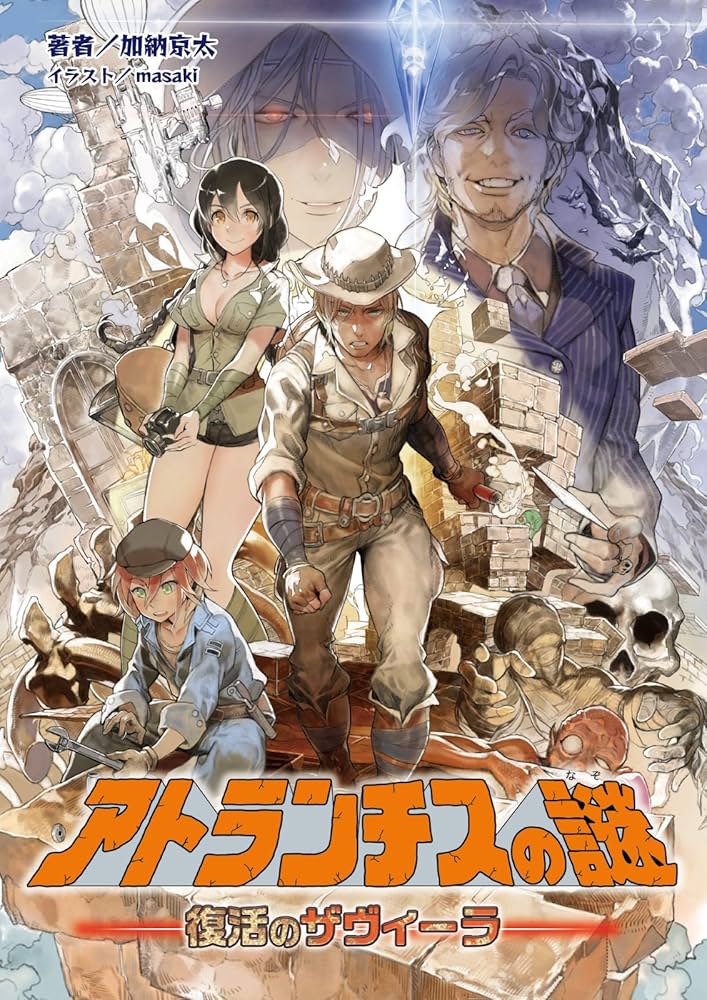
Somehow this terrible game got a novel adaptation and has made cameo appearances in other Sunsoft games. They just won’t let it die! And I have to respect that.