“When Jet Baby flies, she flies up there forever…”
That opening jingle has become an anthem of youth to me. When I hear it, I’m instantly transported back to being a teenager again…
Oh, god.
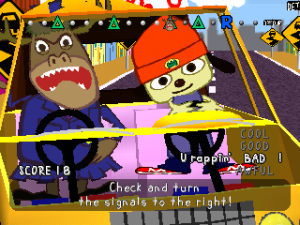
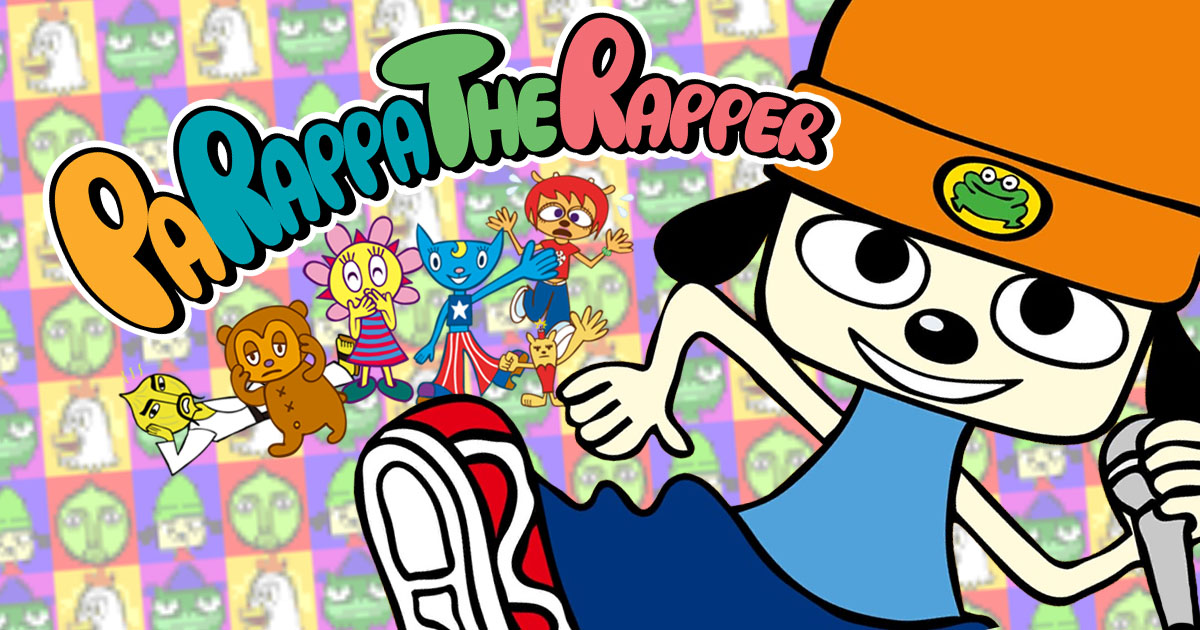
PaRappa the Rapper (or just PaRappa Rapper in Japan) is the brainchild of musician Masaya Matsuura. At the time, Sony sought fresh titles to bolster their new console and specifically wanted one to show off its CD audio capabilities. As someone who hated appearing in music videos, video games seemed like an exciting new way to express and visualize music.
The game’s instantly recognisable art was provided by Rodney Greenblat, whose work had already been well-received overseas. Matsuura suggested keeping the characters two-dimensional and named the protagonist after a slang term, perapera (ぺらぺら), meaning paper-thin. I think it can also mean “fluent”, which is appropriate for a rapper, but don’t quote me on that.
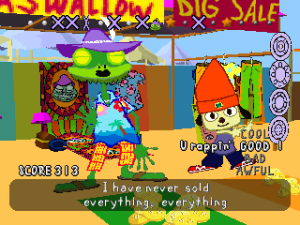
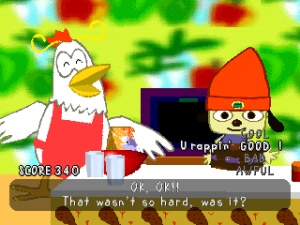
The story follows a young dog named PaRappa as he navigates the trials of adolescence: everything from learning to drive to getting his first job. It’s a largely American depiction of life but the themes are universally relatable. Makes me wonder if Rodney wrote the story too.
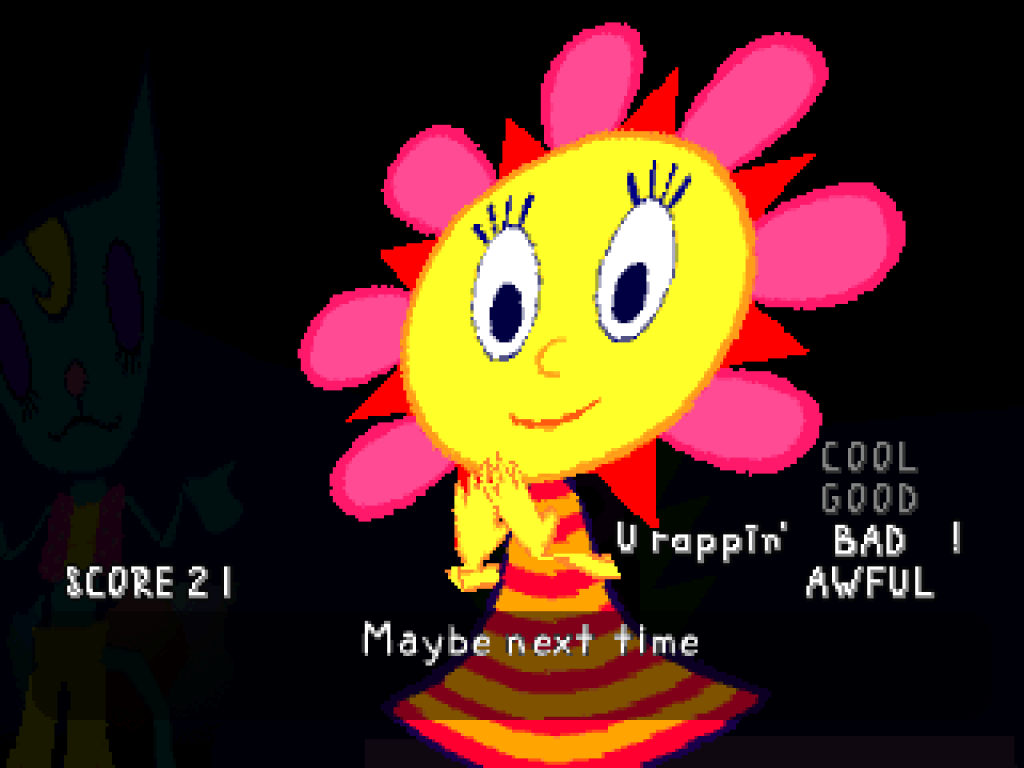
PaRappa is hopelessly in love with an anthropomorphic flower, Sunny Funny, and competes for her affections against the seemingly superior Joe Chin. True to life, there was never any competition, as PaRappa was already in Sunny’s heart. Joe isn’t even a bad guy but he is reflective of PaRappa’s insecurities — ain’t that so real?
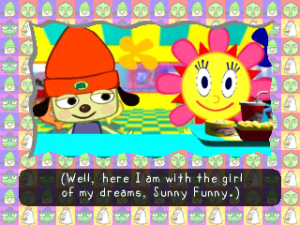
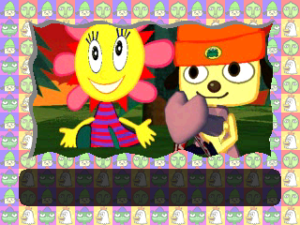
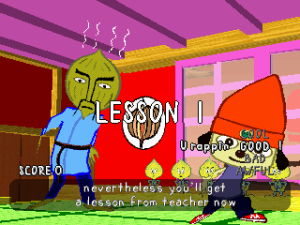
Our hero navigates his life hurdles by marrying them with his favourite pastime, and let me tell you: PaRappa is hardly a rapper. PaRappa does not write his own lyrics, instead parroting whatever his “teachers” say back to them. Each of the six stages consists of an adult trying to instruct PaRappa in some task… or in one exception, fighting with him over a public restroom.
The game’s scoring system is extremely esoteric. Sometimes your tutors won’t appreciate you repeating their lyrics verbatim, but there’s no transparency to how they judge your freestyle efforts either. When you aren’t being frustrated, this lends itself to the game’s humour and it’s amusing to see players berated as they attempt to satisfy the game’s unknowable criteria.
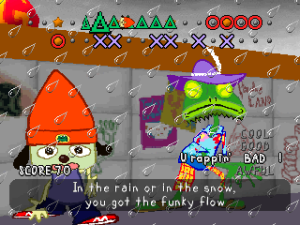
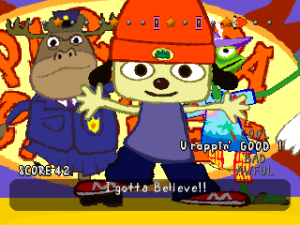
The current understanding is that the system ignores precise inputs, instead listening for particular “beats” and whether you’ve timed those correctly. If a lyric is completely off the mark, it neither punishes or rewards you. It also seems to average your button presses per bar, expecting you to follow the rhythm you’ve set for yourself.
Upon revisiting a stage, you have the chance to impress your teachers so much that they will leave the floor to you. You may then mash the buttons to create an incomprehensible word soup, which sounds less like a rap and more like PaRappa suffering a nervous breakdown. If your gibberish isn’t sufficiently rhythmic, the teachers will return, regretting their decision to pass the mic to a someone who raps like he’s slamming the buttons on a Speak & Spell.
Mechanically speaking, this game sucks… but man, it is so entertaining.
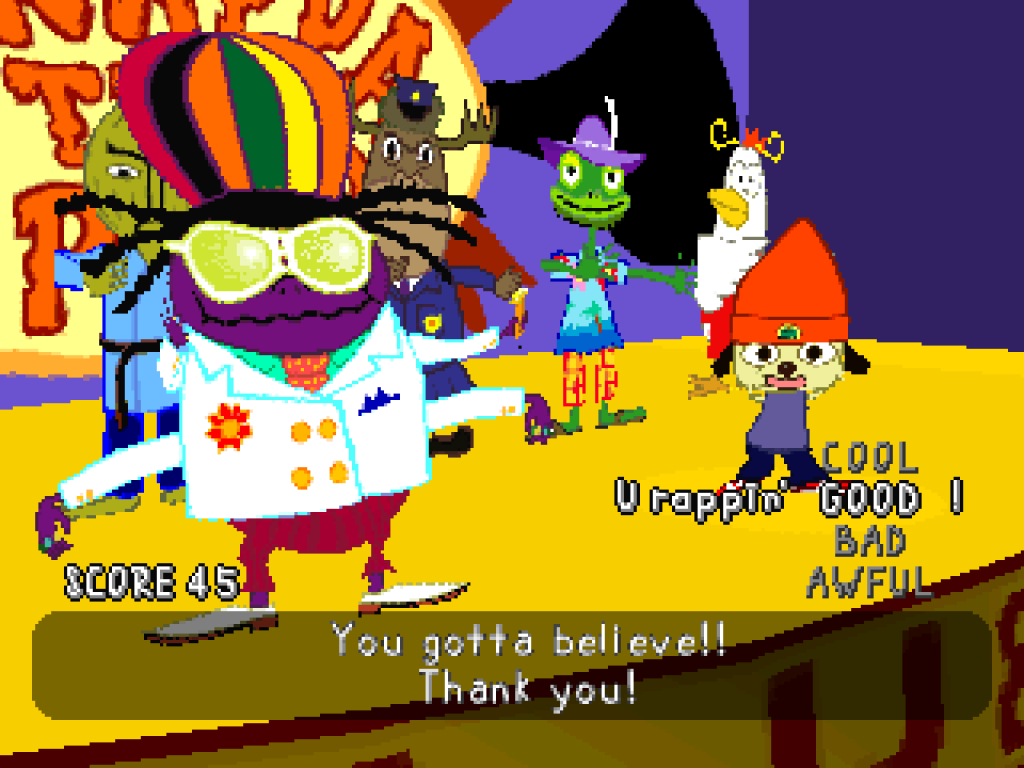
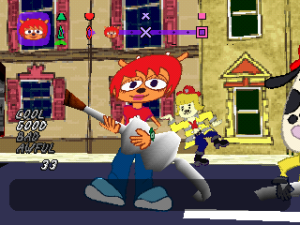
PaRappa was followed by an awesome spin-off, Um Jammer Lammy (1999), which is all about guitar playing (sort of). The call-and-response gameplay is still present but feels less repetitive since Lammy isn’t echoing her teacher’s lyrics. The biggest improvement is to the scoring system, which is now reminiscent of modern rhythm games. I have no idea what the game’s title means; it could be a pun or perhaps “Um” is reflective of Lammy’s anxiety, which she has a lot of.
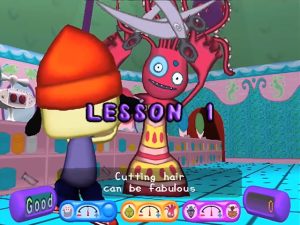
PaRappa would get a direct sequel, PaRappa the Rapper 2 (2001), which trades the story of burgeoning adolescence for a tale about PaRappa learning to be more mature… there’s also a guy who wants to turn all food into noodles for some reason. The game has more substance than the original and the tunes are far more varied, but it’s hard to capture the magic a second time.
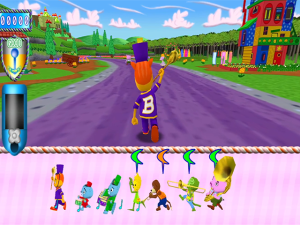
That is technically the end of the series, though Matsuura and Greenblat would collaborate on one more title: Major Minor’s Majestic March (2009) for the Wii, where you use the Wii Remote like a baton (technically a “mace” ☝️🤓) to direct a marching band. Sadly, this title does away with the paper look and original music, instead opting to use popular marching songs. According to Rodney, the game had a troubled development and it certainly shows.
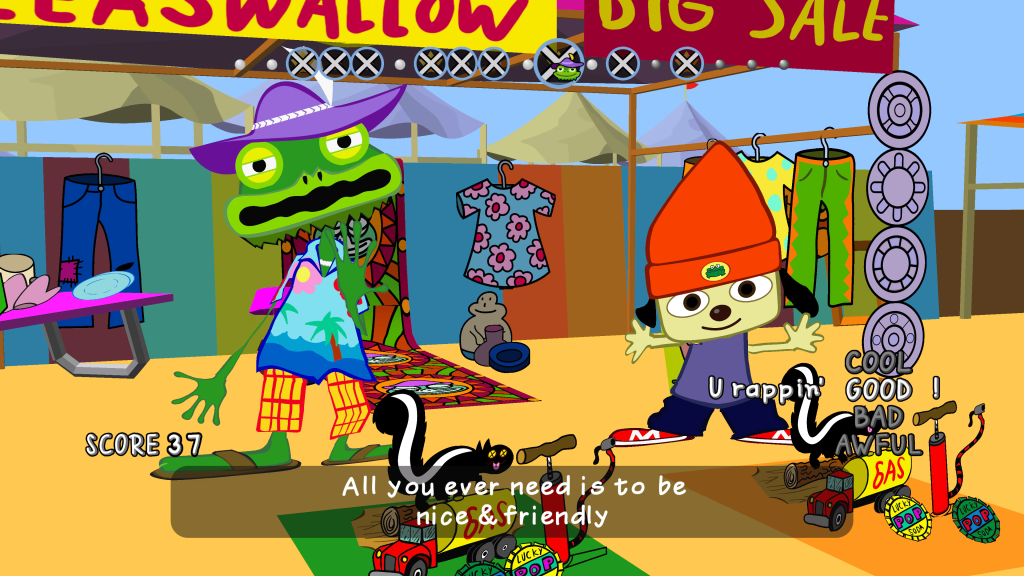
PaRappa has lived on through cameos, solidifying his status as a PlayStation icon. The greatest service to his legacy came with PaRappa the Rapper Remastered (2017), a high-definition update of the original game which stands as the best way to experience it today.
We nearly saw a spiritual successor, Project Rap Rabbit, a collaboration between Masaya Matsuura and Gitaroo Man (2001)‘s Keiichi Yano. Unfortunately, the game’s crowdfunding campaign failed to reach even a quarter of its goal. Unlike PaRappa, this project aimed to feature genuine rap battles with a system that let players choose their lyrical responses. I am forever mourning the loss of this.

The franchise’s two creative minds remain active today, but unless they decide to revisit it, then it seems PaRappa’s story may have reached its end. Even if they were willing to return, the ever-increasing costs of modern game development make such a revival difficult… and given the failure of Project Rap Rabbit, the prospects do look rather bleak.