
You know that saying about broken clocks? This franchise is like several broken clocks.

When Square Enix’s Tetsuya Nomura approached Disney to pitch his idea for a game, I imagine they were enthusiastic: Disney characters in a fantasy RPG with the high quality of a Final Fantasy title? Wow! At that time, Nomura had not yet gained his reputation for being absolutely bonkers.
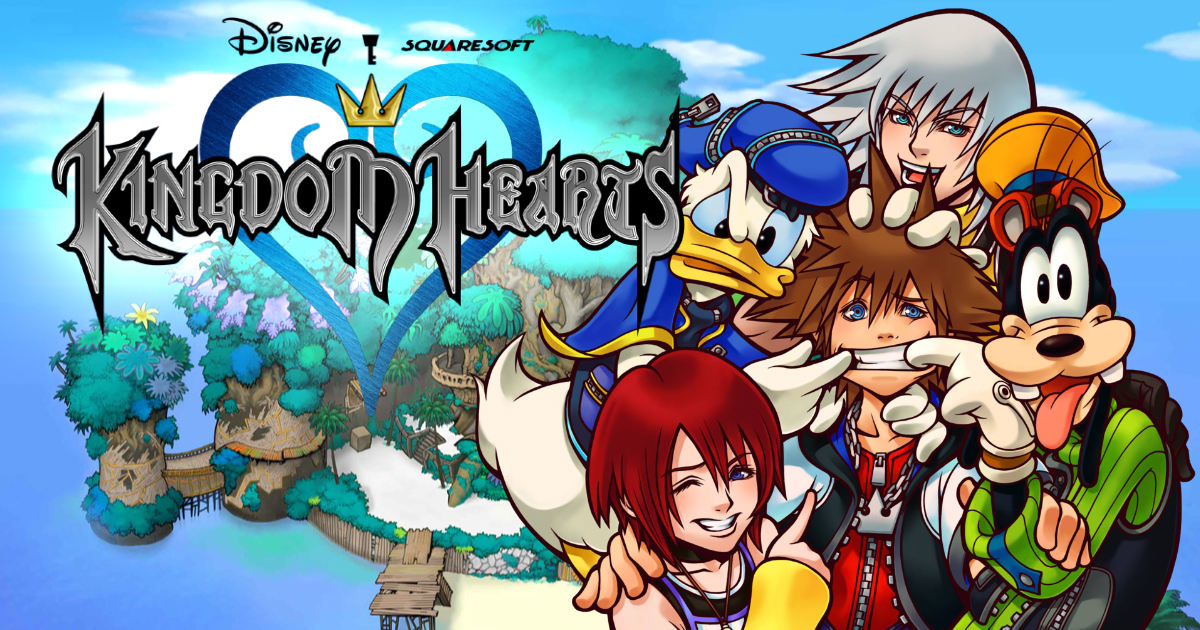
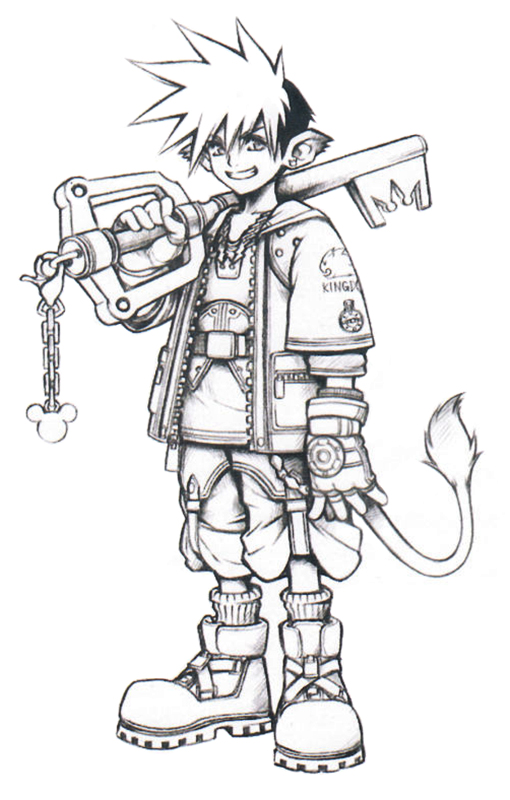
As expected, Disney wanted a light-hearted adventure but Nomura insisted on a more emotional tone. This made the House of Mouse understandably wary, so they were relieved to hear that Nomura wanted an original character anyway: one who could stand side-by-side with animals and humans. His infamous early design didn’t quite hit the mark, but soon we got the lovable Sora, dressed similarly to Mickey Mouse because Disney’s sacred idol was off the table.
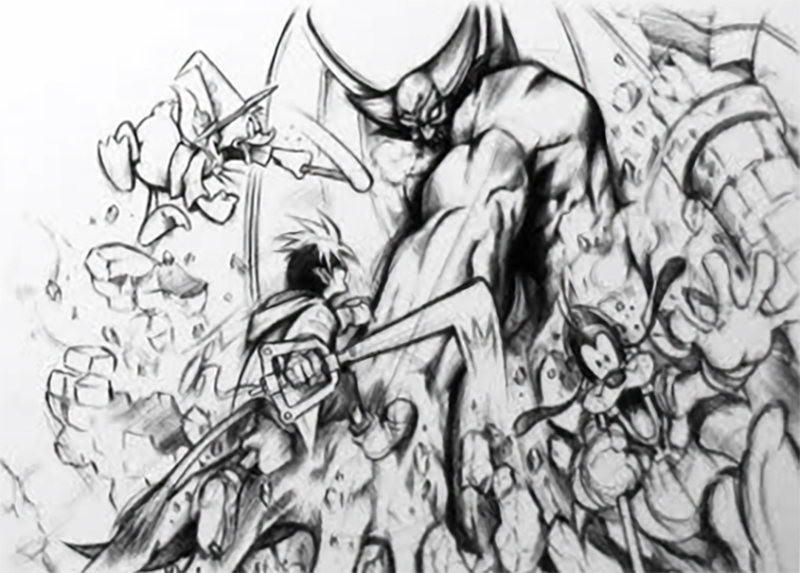
The product was marketed as a “Disney and Final Fantasy crossover” but this isn’t exactly true. It is a Disney game first and foremost, with the Final Fantasy characters only added to convince gamers that this wasn’t just for kids.
Another notably bonkers individual, Kazushige Nojima, was brought in to write the script. Perhaps we should be grateful that Disney placed harsh restrictions, such as characters never behaving unlike themselves or appearing in each other’s worlds (with the exception of Goofy and Donald Duck)… then again, I kinda want to see that.


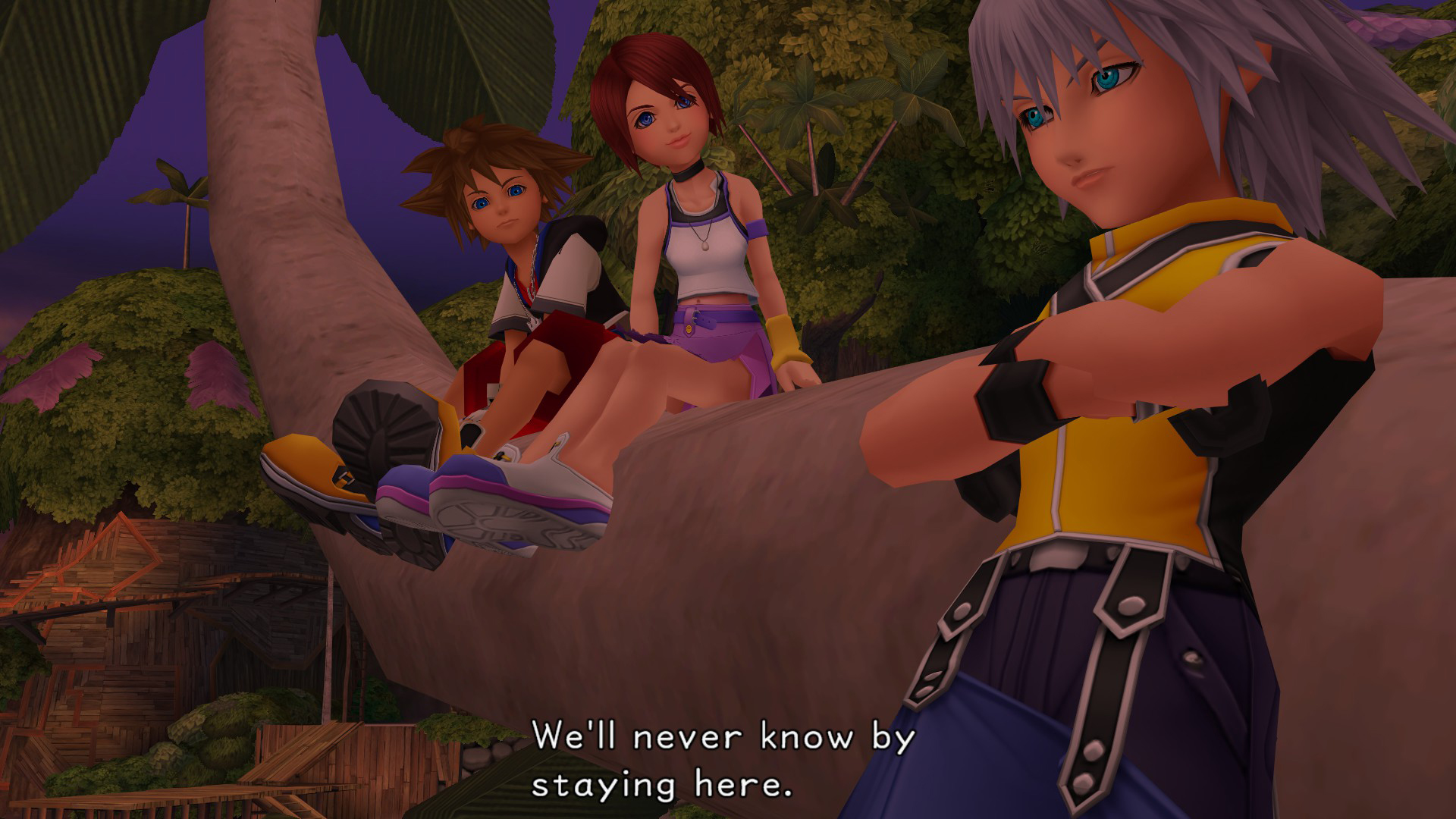
So the end result is basically Sora touring through different Disney universes, following a plot which doesn’t really move along until the final act. The story begins with Sora’s world being consumed by the “Heartless” (a misnomer as they are actually hearts consumed by darkness), an incident which separates him from his friends, Riku and Kairi.
Riku is the “cool guy” rival and the opening establishes him as a source of Sora’s insecurities, despite his deep respect for him. Kairi, on the other hand, is a criminally underutilised character who largely serves as Sora’s emotional anchor.

Nomura took to naming his game “Kingdom” after the repeated use of the word in Disney Parks marketing. Unable to trademark that name, he added “of Hearts” and later just “Hearts” to the title after the word became plot relevant. The title is supposed to read as “the hearts of all kingdoms”, which it doesn’t succeed at, but Kingdom Hearts sure rolls off the tongue.
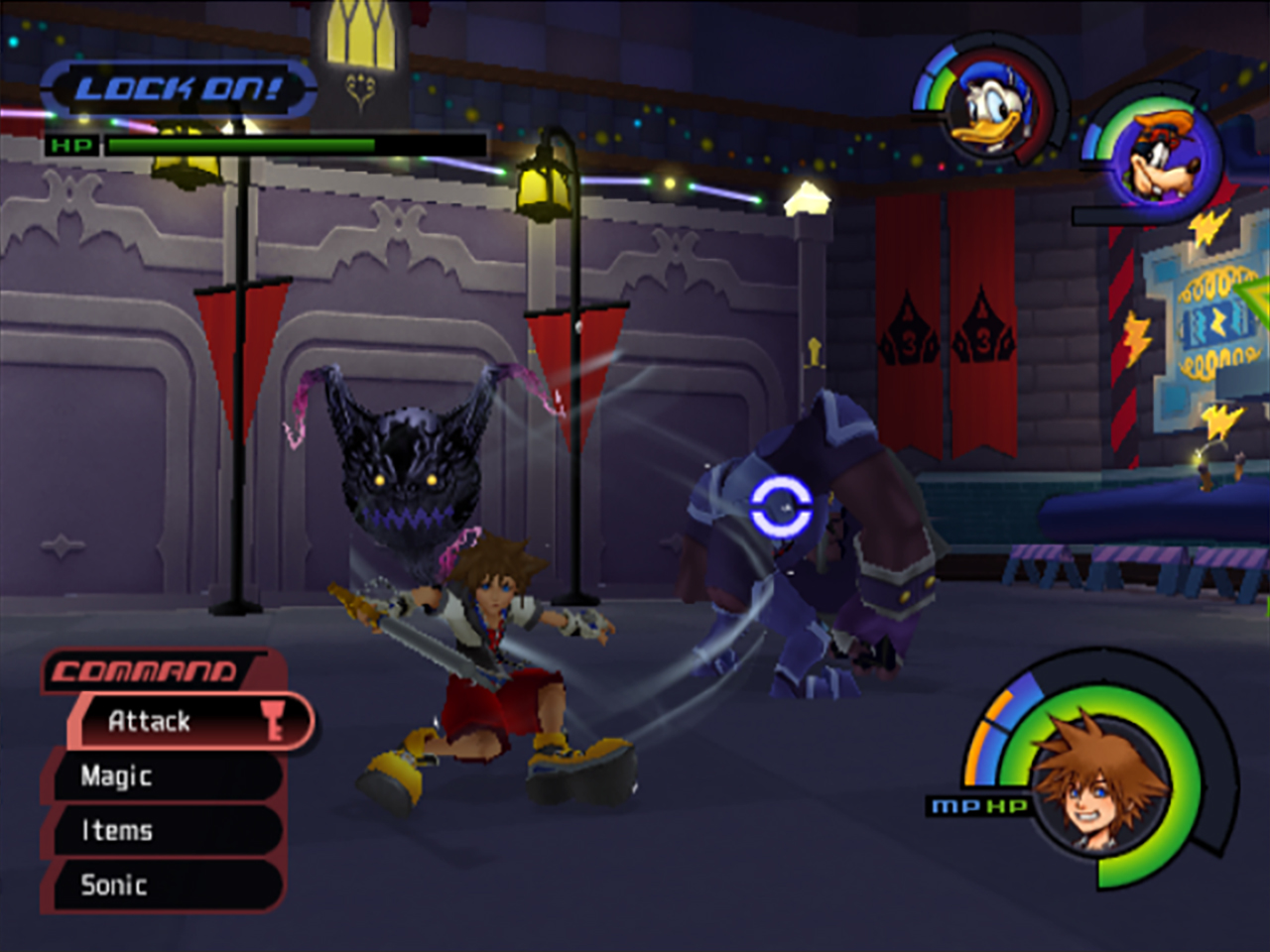
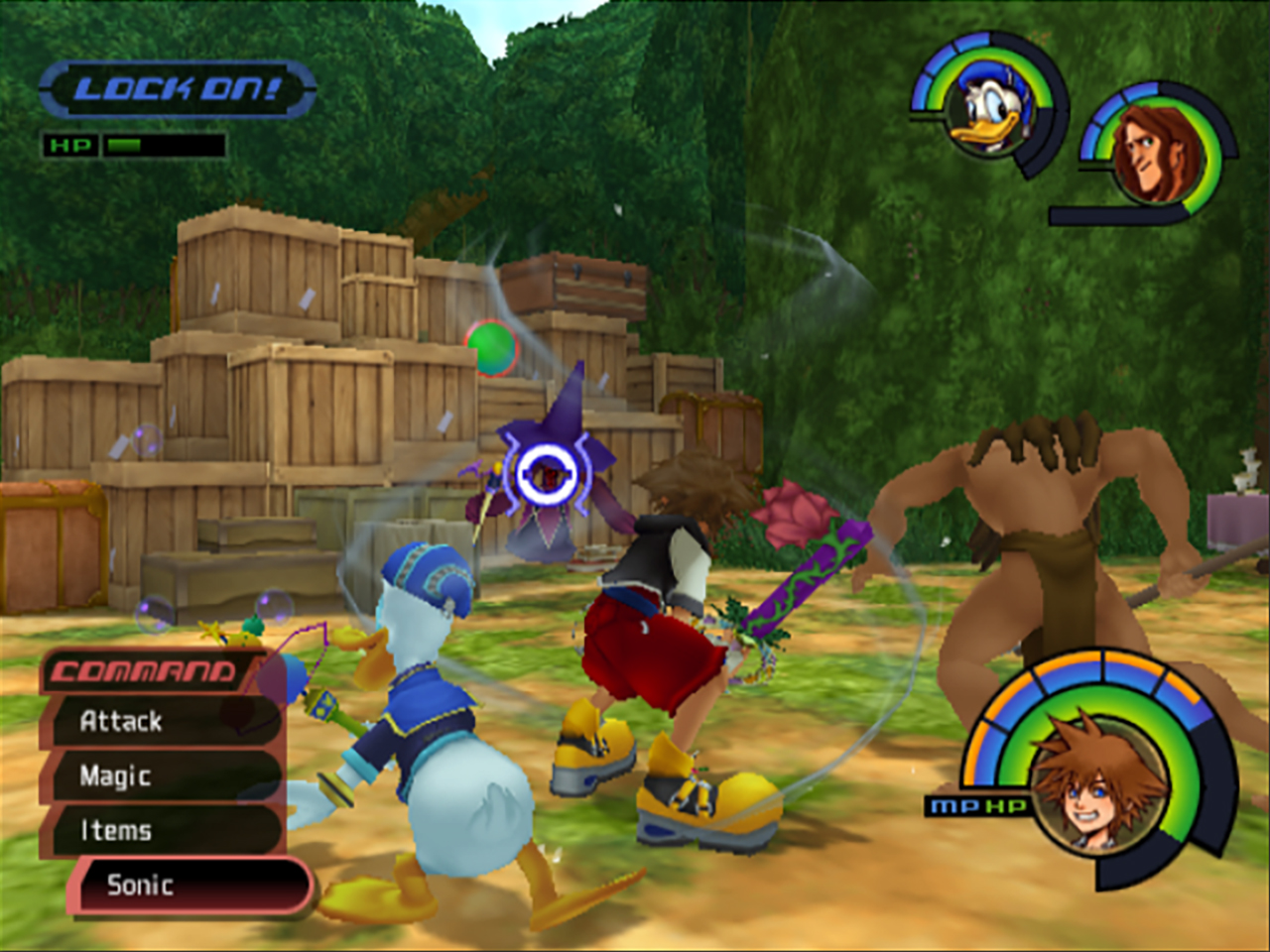
Right from the outset, it was envisioned as an action game with freedom of movement. An Iwata Asks interview 🔗 revealed that Square’s desire was to create a game like Super Mario 64 (1996). Marrying that with Square’s trademark RPG elements is what produced the final outcome. In every project he’s ever directed, Nomura has chosen to depict battles as dynamic, over-the-top and sometimes downright superhuman — so it should be no surprise that Kingdom Hearts ventures into that territory too.


The game’s system is surprisingly technical. There are several stats to track, including distinctions for physical defence and magical defence (dropped in subsequent games), equipment, support, combo abilities, tiers for magic spells — *deep breath* — and party members, item synthesis and ship building too.
This is a very carefully thought and planned out game, which has doubtlessly contributed to its enduring legacy. The other element which lends it some weight would be the story, which also became a source of mockery for how melodramatic it becomes, as well as its repetition of certain arc words.
Despite its clunkiness compared to later entries, Kingdom Hearts has a lot of… well, heart. It is genuinely a pleasure to explore the various Disney worlds with Sora, Goofy and Donald. Everyone is surprisingly on-model for a PlayStation 2 game and the use of official Disney voice actors lends it a lot of credibility.


If you prefer to be surprised, then please skip this part. Here are the Disney-derived worlds depicted in Kingdom Hearts:
- An ambiguous Disney castle – Modelled after the one in Cinderella (1950)
- Wonderland – Alice in Wonderland (1951)
- Deep Jungle – Tarzan (1999)
- 100 Acre Wood – The Many Adventures of Winnie the Pooh (1977)
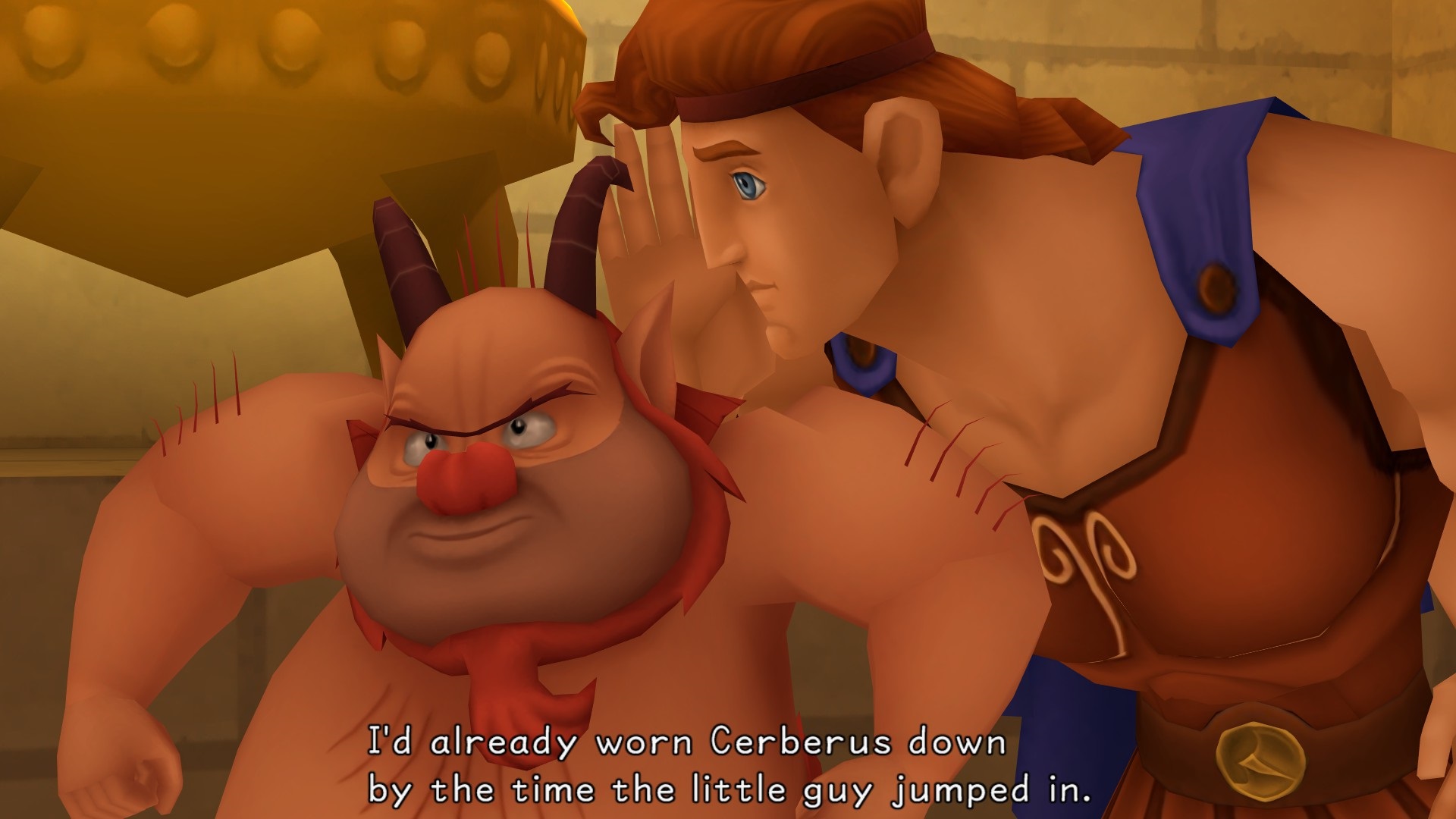
- Olympus Coliseum – Hercules (1997)
- Agrabah – Aladdin (1992)
- Monstro – Pinocchio (1940)
- Halloween Town – The Nightmare Before Christmas (1993)
- Atlantica – The Little Mermaid (1989)
- Neverland – Peter Pan (1953)
- Hollow Bastion – An original world with elements of Beauty and the Beast (1991) and Sleeping Beauty (1959)
There are also a few nods to other films in the form of character cameos.
Navigating Disney licenses is a tricky thing. There were numerous worlds considered, among them being Toy Story (1995), The Lion King (1994) and The Jungle Book (1967). The first two would see an appearance in later games, while the third has been scrapped twice. The rights to Tarzan are especially tricky, as they’re tied up with the Edgar Rice Burroughs estate.


⚠️ SPOILER WARNING ⚠️
All this and I haven’t once mentioned Sora’s signature weapon, the Keyblade. It is a tool bestowed upon worthy individuals, allowing them to vanquish the Heartless. The story’s penultimate chapter reveals that Riku was the Keyblade’s intended bearer, which brings Sora’s fears of inferiority to the surface.
This is a surprisingly emotional beat as Sora loses everything that he thought made him special, including his friends. Naturally, he manages to prove himself, which is just as well since Riku was being groomed by the powers of darkness anyway.
The story does continue beyond this point but allegedly, this was not the intention. Riku’s fall to darkness was the central dramatic conflict, with its expansion into a larger mythology being a relatively late addition. Hironobu Sakaguchi may have contributed to this by telling Nomura that the game would fail unless it aimed as high as Final Fantasy.


END OF SPOILERS
Although I can’t find the budget for Kingdom Hearts, it certainly must have been less than the very impressive sales figures it saw. This established some trust between Square Enix and Disney, who allowed them more creative freedoms in Kingdom Hearts II (2005). The sequel was preceded by a portable title, Kingdom Hearts: Chain of Memories (2004), which was made to bridge a year-long gap intentionally left between the first and second games.
Chain of Memories would start a trend in which every Kingdom Hearts media, even the most seemingly mundane, would include crucial worldbuilding elements. Perhaps this was intended as a reward for devoted fans, but it has resulted in Kingdom Hearts having an infamously complicated plot.


This may have worked better if the writers had any idea where it was all going; a loose story arc bridging all titles began to form during Kingdom Hearts II, but Nomura has admitted that the games are largely written as they’re made.
Given the trickiness of collaborating with Disney, I think Square Enix wisely treats each game as a potential last — ignoring the inclusion of a teaser at the end of every game. Disney owns the Kingdom Hearts series, including its original characters like Sora. Despite this, he managed to appear in Super Smash Bros Ultimate (2018), which must have required walking a legal minefield.

While I take issue with Nomura and Nojima’s creative direction on most titles they’ve collaborated on, somehow it all just works with Kingdom Hearts. Perhaps because the premise was ridiculous to begin with, I find myself looking forward to how much sillier it can get.
As AAA games get harder to make with each passing year, the development time between Kingdom Hearts titles has considerably lengthened. If the development stories of Final Fantasy XV (2016) are to be believed, Nomura’s directorial style may be another factor. Although the story which started in Kingdom Hearts has since been concluded in Kingdom Hearts III (2019), the madman is allegedly plotting another large story arc. Good grief.
