When creating a rival product, you need something to make it stand out. Capcom’s Street Fighter II (1991) opened the floodgates for imitators and within a year, martial arts already felt old hat. Capcom knew this, trading karate gi for monsters and superheroes in their next fighting games.
So Atlus said “how about a violent family?”
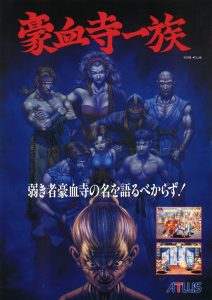
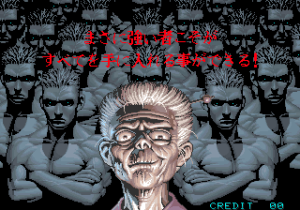
Gōketsuji Ichizoku (or Power Instinct overseas) concerns the Gōketsuji family. Each fighter is either directly or distantly related to them in some way (seriously 🔗). Every five years, the clan holds a tournament to decide the new chief. Eight participants throw their hats in the ring against its current figurehead, Gōketsuji Oume.
Oume has since become the face of the franchise. Really, how many video games let you play as an old lady, let alone putting her on the front cover?
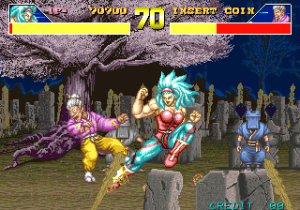
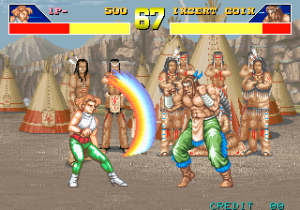
The gameplay is the usual Street Fighter fare but stands out in its humour: characters will brandish radishes and spit their dentures at you, all while kuroko (stagehands) officiate the match. One unique feature is the ability to smash through the edges of a stage, extending the fight into new areas. It may also be the first fighting game to have double-jumps.
Two of the stages have lyrical themes and Gōketsuji Ichizoku‘s home ports would include a karaoke mode for them. This is such a charming idea that I don’t know how it didn’t catch on more.
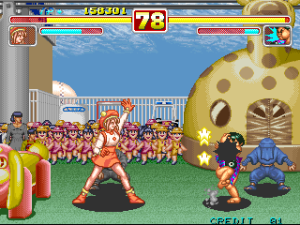
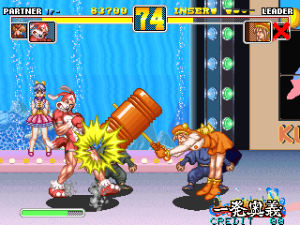
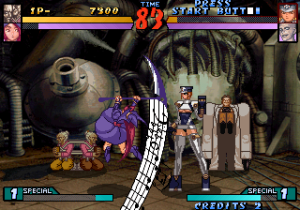
Gōketsuji Ichizoku 2 (1994) introduced the staple “Stress Meter”, a gauge which only fills when you are attacked or fail to land an attack. When full, your character will erupt in flames, granting you a momentary reprieve.
Also established here is the losing screen: fighting games frequently depicted the loser’s portrait as beaten up, but in this case, the character’s faces are drawn on with a marker.
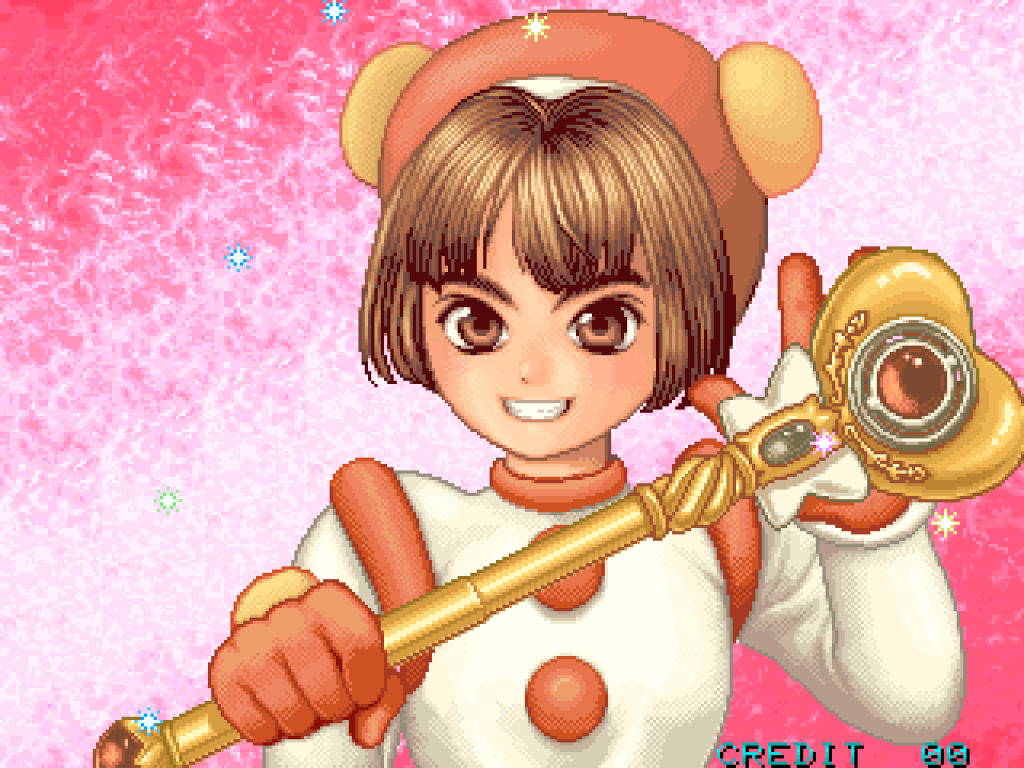
Gōketsuji Ichizoku 2 is the first time we see fan favourite Clara, a magical girl who has become just as iconic as Oume. Oh, and even more vocal songs!
The sequel saw an update in Gōketsuji Gaiden: Saikyō Densetsu (1995), which added a tag team system and a “sudden death” mode if both sides draw. Oume and her sister Otane are also hilariously tied together, literally fighting back-to-back.
Already a background artist in the previous titles, Range Murata provided the character art for Groove on Fight: Gōketsuji Ichizoku 3 (1997). This entry takes place in the future and feels a little stiffer than the others.
Anyway, wasn’t this about a game called Matrimelee?
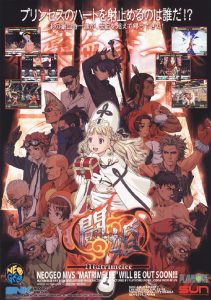
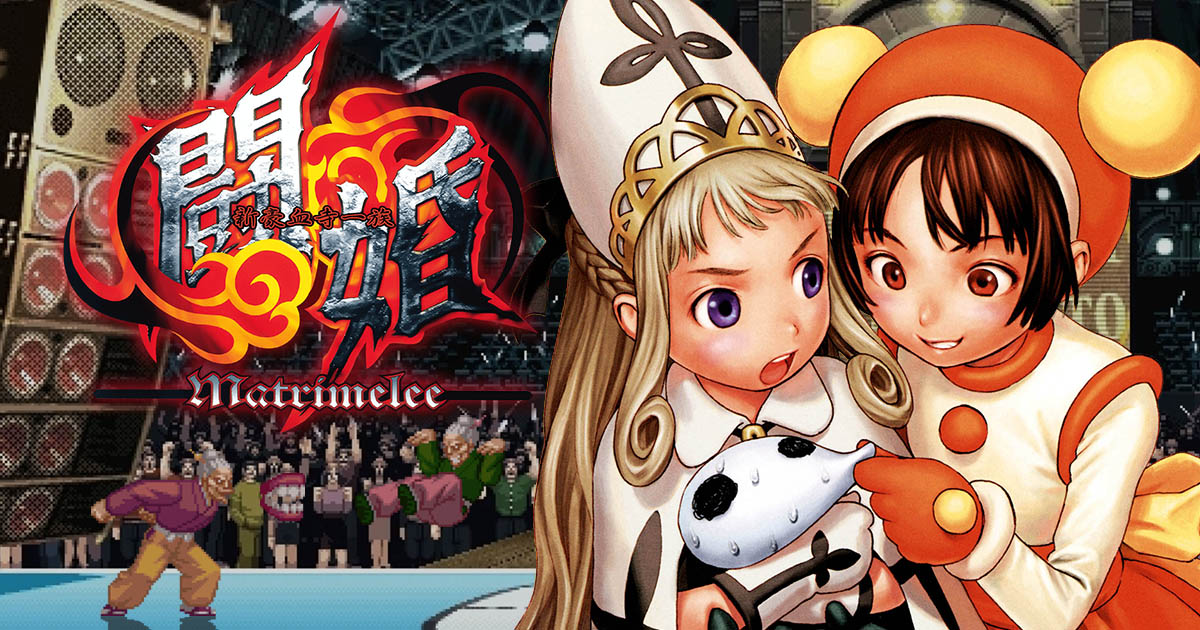
Matrimelee — short for Shin Gōketsuji Ichizoku: Tōkon Matrimelee — is the fifth and technically final game in the series; the next few being more like updates. This time, the entire Gōketsuji family has been invited to a “certain country” (某国 or bōkoku, a recurring term for an intentionally unnamed place) to fight for a princess’s hand in marriage. There’s also a prince for the ladies.
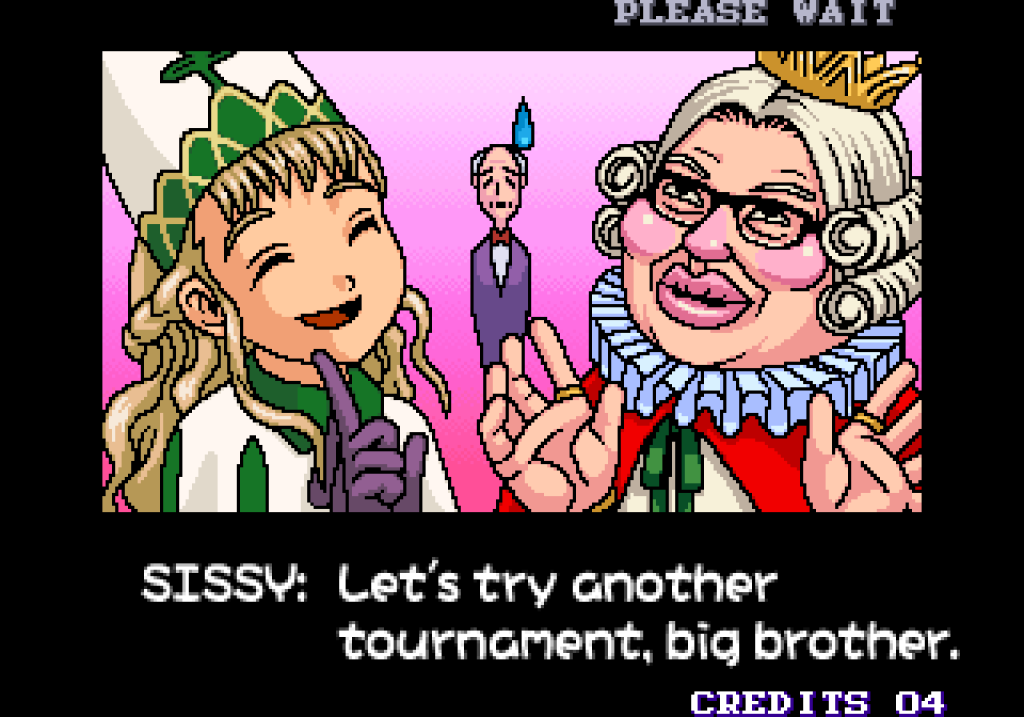
As usual, they must prove their worth in a fighting tournament, but surely the petite and demure Princess Sissy (likely named after Sissi of Austria) couldn’t possibly pose much of a threat?
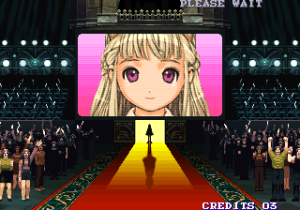
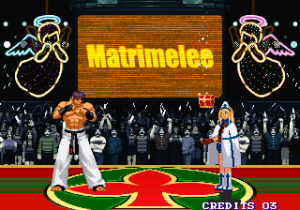
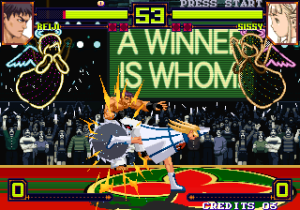
Nevermind.
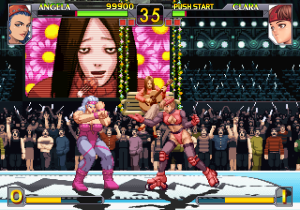
Most of the original cast return sporting new designs, but with their movesets largely intact. Built on the same framework as Rage of the Dragons (2002), the gameplay is smoother than ever. All of series staples can be found here, like the humorous attacks and the signature Stress Meter.
A strange feature occurs if two characters taunt at the same time: the action switches to a minigame where a monitor displays a button, and whoever presses it fastest will hit the other player. Do not attempt this against Sissy, for she will never lose.
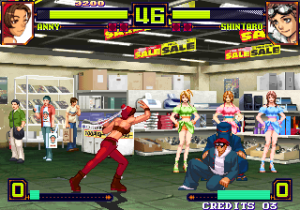
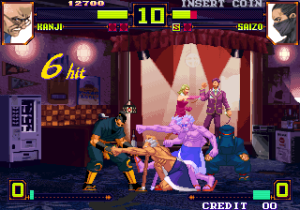
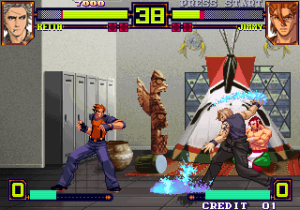
The lyrical music gets cranked up to eleven here: every stage has a catchy song performed by background characters. Clearly the developers knew what Gōketsuji fans loved and decided to go all out. There are nine vocal songs in total, making for a very singable soundtrack — one of the stages is a karaoke bar, even.
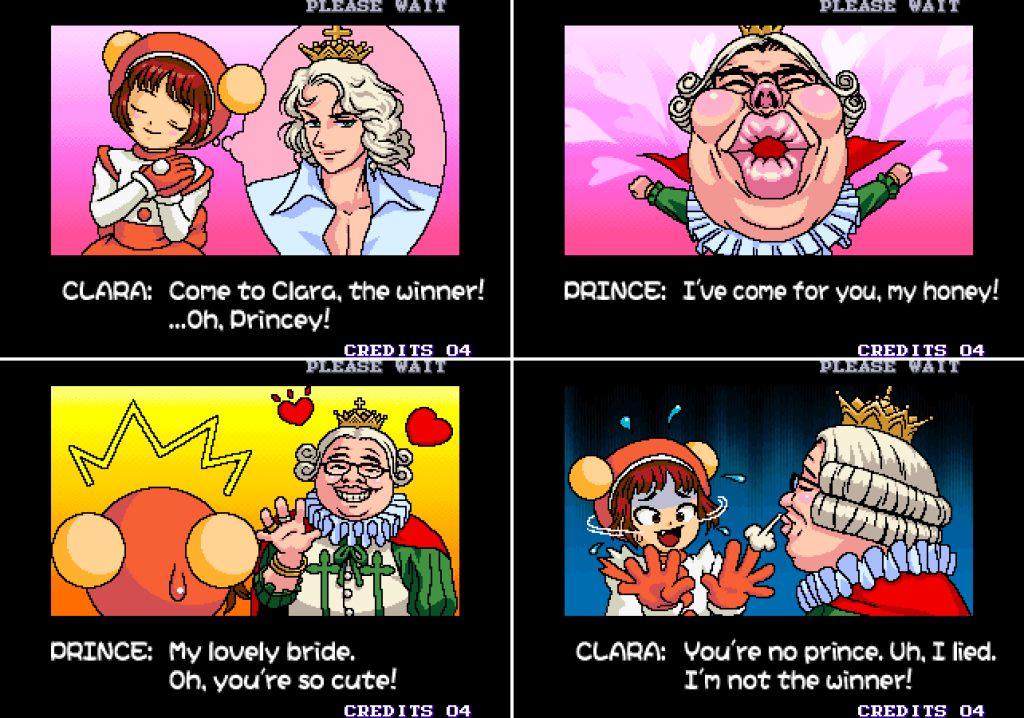
Matrimelee has four secret characters, all lifted directly from Rage of the Dragons. Humorously, your character will barge into waiting rooms between matches to pick on their next opponent, only to find them substituted for these guest characters.
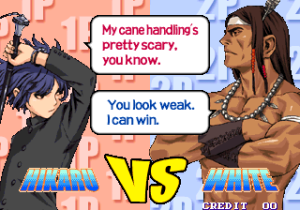
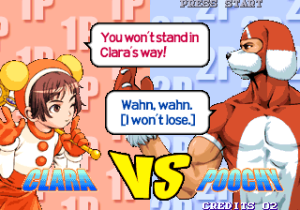
The original Gōketsuji Ichizoku had unique interactions between characters which were removed from the English release, but here they’ve all been translated.
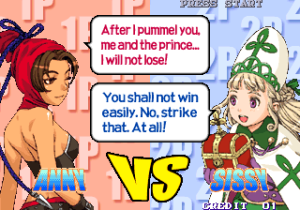
Defeating Sissy is no easy feat. She has an arsenal of cheap tricks, including an absurdly large regular attack, projectile spams and the ability to turn you into a helpless frog; she even laughs at your predicament.
If I can give any advice, it’s that she’s susceptible to mix-ups, so keep leaping over her and landing hits on her back. Don’t be afraid to win via Time Out either. That may seem cheap but all’s fair in love and war.
The game’s first update, Shin Gōketsuji Ichizoku – Bonnou Kaihou (2006), traded the final boss for… kickboxer and comedian Bobby Ologun? Okay.
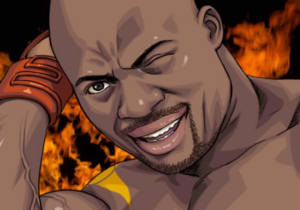
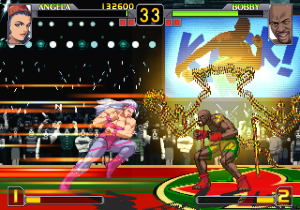
Bobby was known for his appearances on Sanma no Super Karakuri TV, a variety show, where his poor grasp of Japanese led to the embarrassment of others. It’s as dated as it sounds but it’s weirdly appropriate for the world of Gōketsuji Ichizoku.
This game sadly did away with the Stress Meter, exchanging it for a more standard Super meter as seen in other fighting games. The visuals saw an improvement thanks to the PlayStation 2 hardware and a number of old characters returned, but it’s largely the same game.
The final revision, Goketsuji Ichizoku Senzo Kuyou (2009), overhauled the gameplay enough that it could be regarded as a full sequel. With a new story, background art and music, it could very well be. Indeed, it was marketed as such.
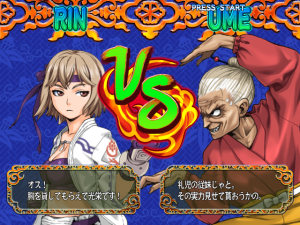
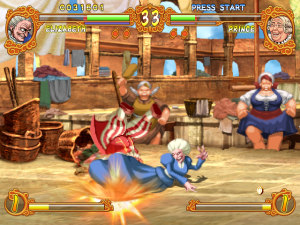
You can now perform launchers and lengthy combos, not unlike Marvel vs. Capcom (1998) or Guilty Gear (1998). It’s an improvement in some ways but doesn’t innovate as much as Matrimelee did. It’s still fun to play and the new characters are great — like Rin, the series’ first stance dancer, and Elizabeth, who can attack you by inflating her chest.
Clara would see further appearances in Yusha: Heaven’s Gate (1996) and her own game, Purikura Daisakusen (1996), but neither these or the larger Gōketsuji series made much of a splash overseas. Maybe it’s how unapologetically Japanese it all is, but seeing SNK and Sega (its current rights holder) reviving their classic fighting franchises recently, maybe Oume or Clara will turn up as guest characters one day.