


Note: Special thanks to RetroTranslator and DvD Translations for the translated images of Otogirisō and Portopia Renzoku Satsujin Jiken respectively.
You may already know this but Enix didn’t make Dragon Quest (1986); they only published what Chunsoft created. That name is now associated with the Danganronpa series after their merger with Spike, but Chunsoft’s contributions to gaming run much deeper.
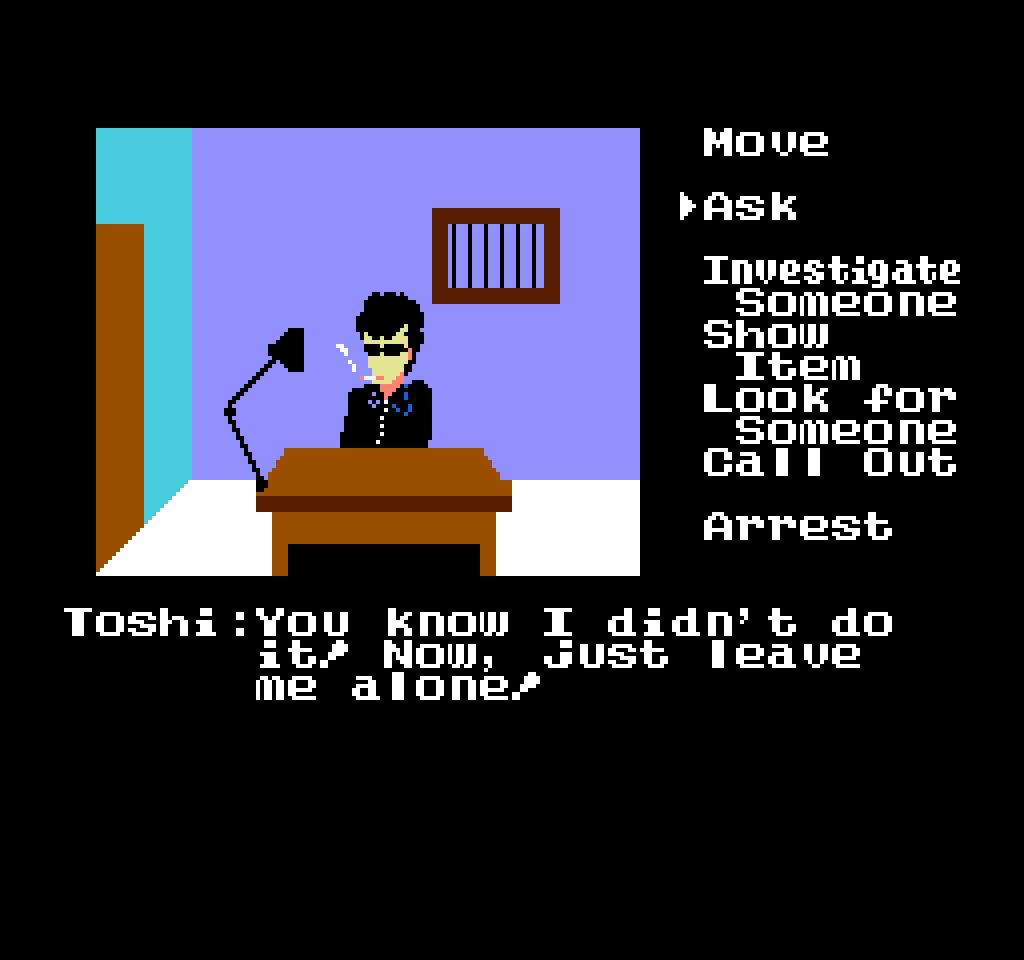
Before Dragon Quest, Spike made Portopia Renzoku Satsujin Jiken (1983) under Enix, which is widely considered (outside of Japan) to be the first “visual novel”. This observation is made in hindsight, as the term “visual novel” was only popularised by the awful Shizuku (1996). In Japan, Portopia is still considered an ADV or adventure game.

After the release of Dragon Quest V: Tenkū no Hanayome (1992), Chunsoft finally had the opportunity to publish their own game… and what they decided on was nothing like anyone expected.
Otogirisō is the first “sound novel”, a term coined by the developers to describe its focus on sound and reading. To this day, the term is still informally used when referring to visual novels of a particular style.
For one, text occupies the whole screen, reducing images to a secondary element. For a medium which has always placed graphical innovations first, this feels quite subversive. I imagine later gamers will have first seen this style in visual novels like Higurashi no Naku Koro ni (2002) or Saya no Uta (2003).


Otogirisō is the Japanese name for St. John’s Wort, which roughly translates as “grass that cuts the younger brother”, a reference to a revenge tale which provides an explanation for the flower’s shape. This will be relevant, of course.
The game starts by allowing you to name yourself. As is typical for the time, you are assumed to be male and given a girlfriend named Nami. You spot a field of St. John’s Wort while on the road at night, and tell a very frightened Nami about the legend.
A series of misfortunes, beginning with a near-collision from another car, forces you to seek help in a European-style mansion nearby — the very one surrounded by St. John’s Wort.


Now here’s where it gets interesting: Otogirisō doesn’t have one story path with slight choice-based variations, it has entirely different storylines. You won’t see every possibility at first, as more paths open up with each playthrough of the game.
Even the opening paragraph has variations, setting you on different paths from the outset. You’ll need a flowchart if you hope to navigate them all, which someone named Lord_Thantus has thankfully made. 🔗


The stories range from relatively grounded to downright supernatural, completely altering the backstory and the relationships that characters have to each other. They all have similar beats — for instance, you will always inspect the aquarium and a suit of armour first — but the content can vary immensely.
Sadly, not every path is of equal quality. This game had four writers and some of the sections are quite bad. There are a few where the protagonist’s personality changes suddenly and others where the house’s phenomena isn’t explained at all. Since the game’s structure is very complicated, I imagine playtesting must’ve been a nightmare, but that’s still no excuse.


The game’s director, Koichi Nakamura, claims that his inspiration was his non-gamer girlfriend, who couldn’t handle the mechanical complexity of his other games. He sought to make a game where skill was not a barrier for playing it to the end.
Acquiring nine endings unlocks a bonus route which goes all-out on the sexploitation. I didn’t find it very good or even funny, but I’m sure someone’s had a good time with it. This feature called “Pink Bookmark”, would appear in all of Chunsoft’s sound novels — even later visual novels like Danganronpa to an extent.


If you find all of this difficult to track, then you’ll be awash to find that revisiting endings you’ve already discovered will also offer slight differences. Some of them provide up to four variations, which are usually comedic in tone. This is cute; I wish games would do this more often.
A very ambitious outing from Chunsoft and a style which I’d love to see more developers take advantage of. They would make a few more sound novels themselves, with their next being the most popular: Kamaitachi no Yoru (1994). Unlike Otogirisō, this is a murder mystery, but with a similar branching path system.
A remake for the PlayStation, Otogirisō Soseihen (1999), allows you to switch to Nami’s first-person perspective at times. This feature, called “zapping”, is borrowed from another of Chunsoft’s sound novels: Machi (1998). Soseihen opts for a grittier visual style which may not be to everyone’s liking.


I wanted to share some development trivia at the start of the article, but it took too long to get to the game, so here it is:
Development started while Dragon Quest V was wrapping up and they did consider making another RPG, but ran into logistical difficulties. Most of their coders and artists were busy on their existing project, leaving only the writers and sound designers. Necessity breeding innovation once more.

A spooky game was quickly settled on as they felt this would be the most effective use of sound. You have to remember that 16-bit consoles were new at the time, so it was an exciting new prospect. Chunsoft had already experimented with “creepy audio” in a prototyped arcade game, Grandish Manor, of which sadly no footage seems to exist.
The team looked at gamebooks for inspiration, but wanted to take advantage of the medium to create a more interesting experience. To maintain their goal of accessibility, it was decided early on that there shouldn’t be any fail conditions or bad endings. I think it’s great that story you want to read influences the story which is laid before you.
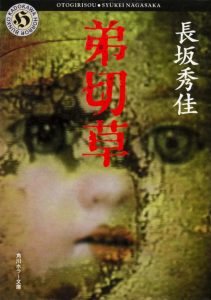
Perhaps it’s no surprise that Otogirisō saw a couple of written adaptations, but it also had a film in 2001, which the director wanted to have multiple endings — so not unlike Clue (1985), I guess. This was released overseas as “St. John’s Wort”, which undermines the significance of the original title.

I haven’t seen a sound novel since Play Novel Silent Hill (2001), which I suppose is understandable as it’s a genre with very limited appeal. Most people just don’t like reading lengthy pieces, which is why I can’t convince most of my friends to read these articles.
Just kidding; I love you guys. But if you made it to the bottom of this, I love you more.
