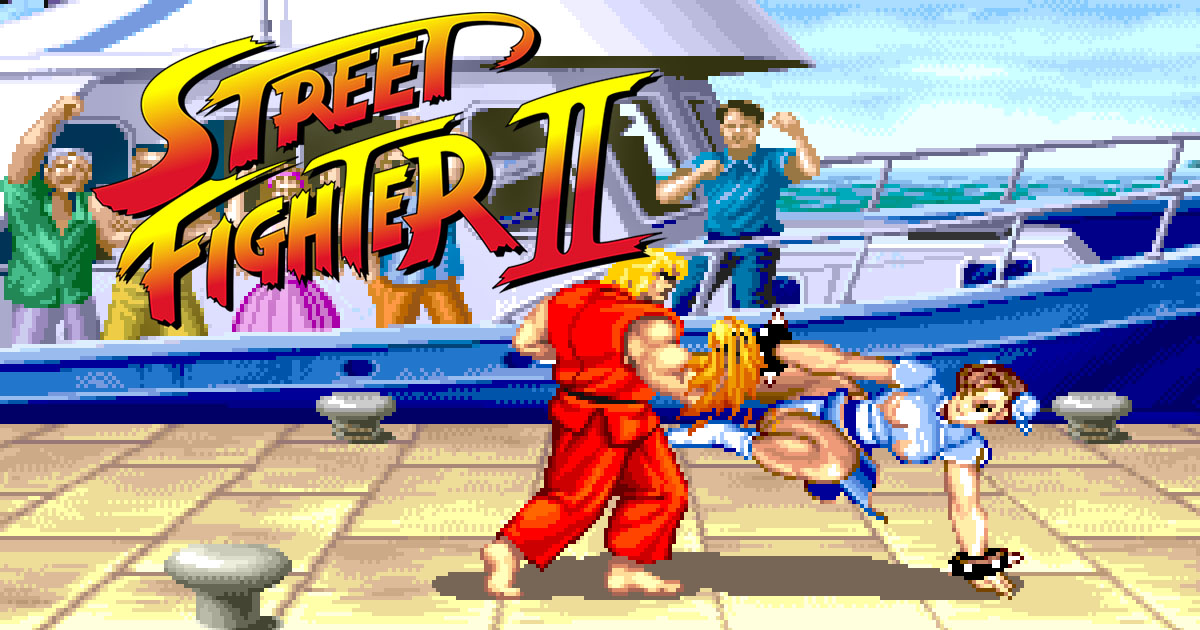
Fighting games can be divided into two eras: before Street Fighter II and after Street Fighter II. In the beforetimes, there were the likes of Yie Ar Kung-Fu (1984) and International Karate (1985), but those have since been left by the wayside. Capcom’s Street Fighter II did more than change video games, it was a cultural behemoth that shaped pop culture.
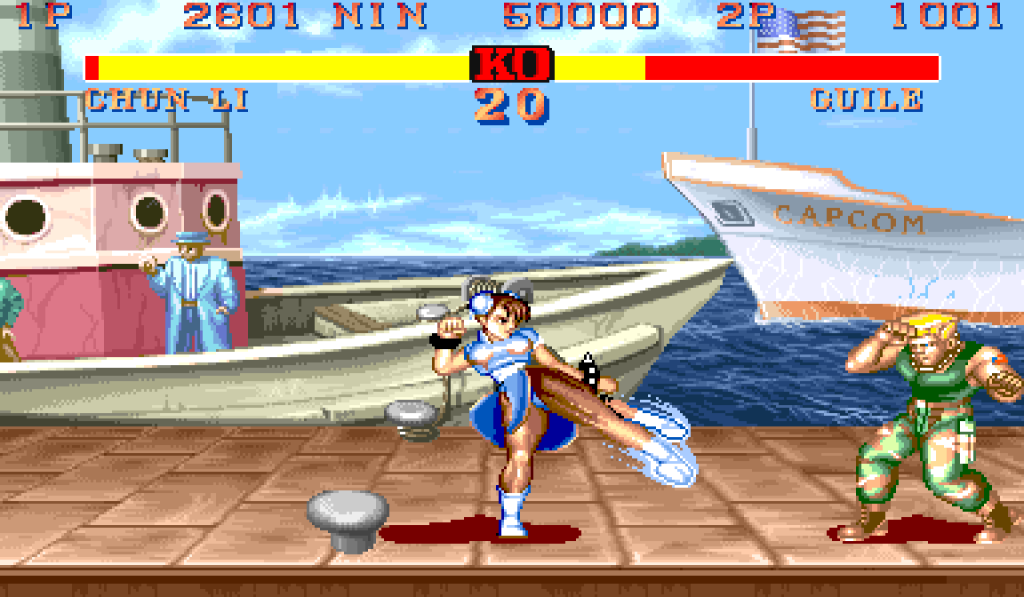
Street Fighter II‘s success can be attributed to its low skill floor and competitive design. Those older games were usually single-player affairs with rather clunky controls — something even Street Fighter (1987) was guilty of. With its sequel, they finally got it right. This was a game you could play casually with friends or as seriously as a sport.
It was also a time when global pop culture was embracing martial arts, anime aesthetics and multiplayer gaming. Just the perfect storm of all the right things.
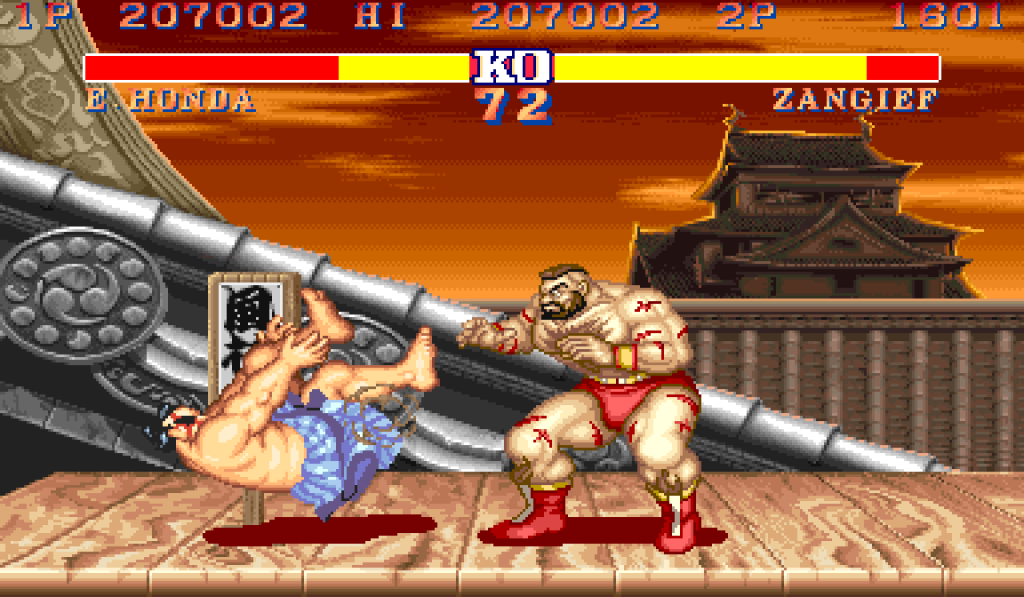
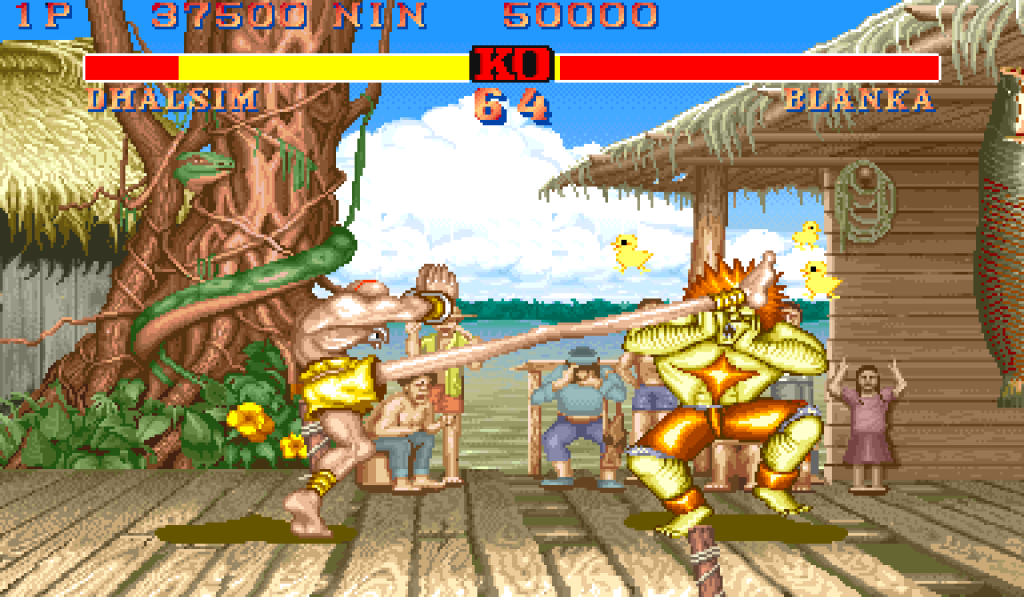
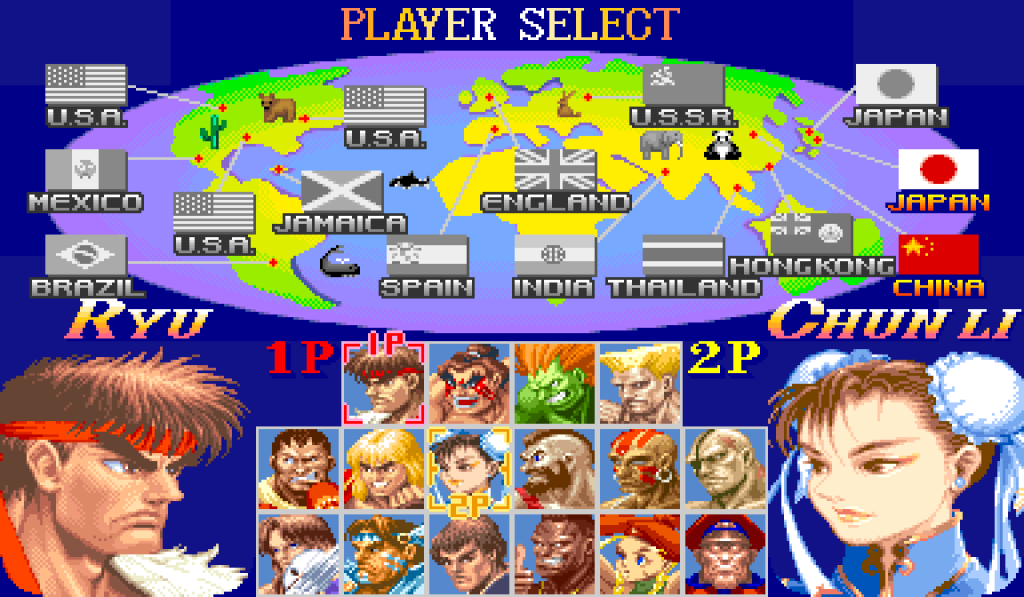
The select screen shows you eight characters (sixteen in its final iteration), all with unique appearances and reflective of different parts of the world. Just looking at them gives you some idea of what they do, making it easy to choose someone you align with before you’ve even picked them up.
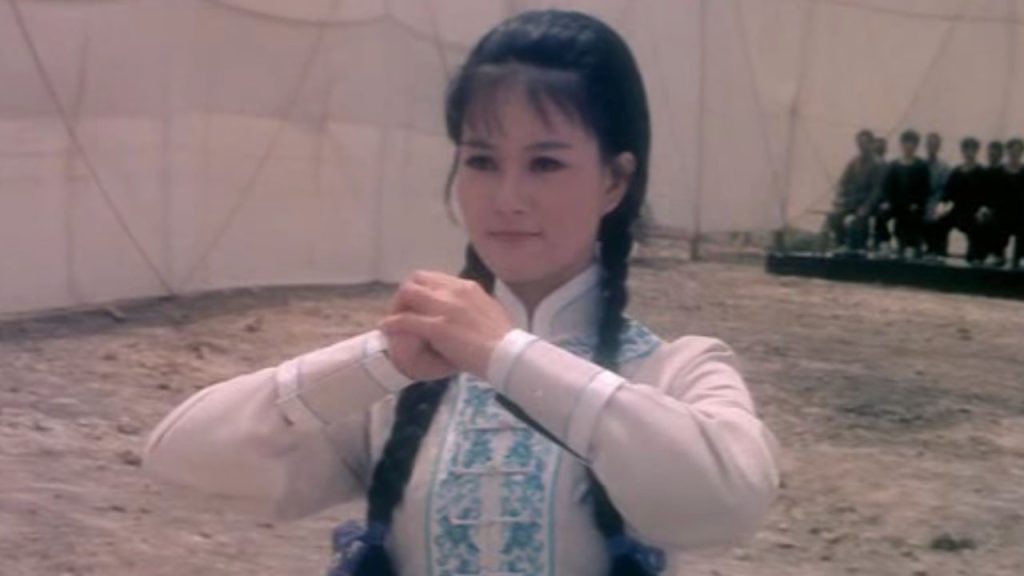
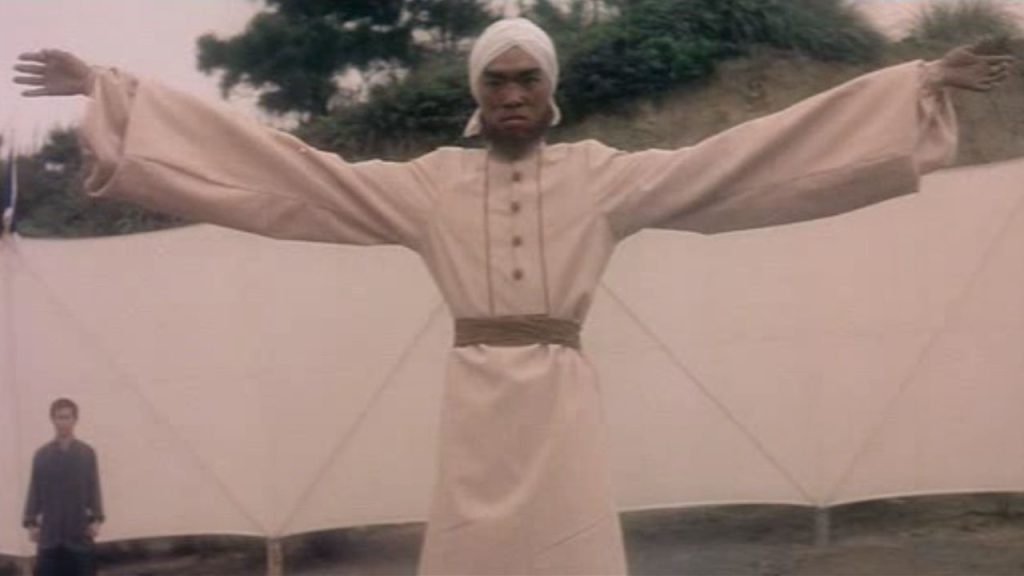
The game’s simple story concerns a martial arts tournament, inspired by the likes of King Boxer (1972) or Enter the Dragon (1973), with a special mention to Master of the Flying Guillotine (1976) — you’ll see what I mean once we talk characters:
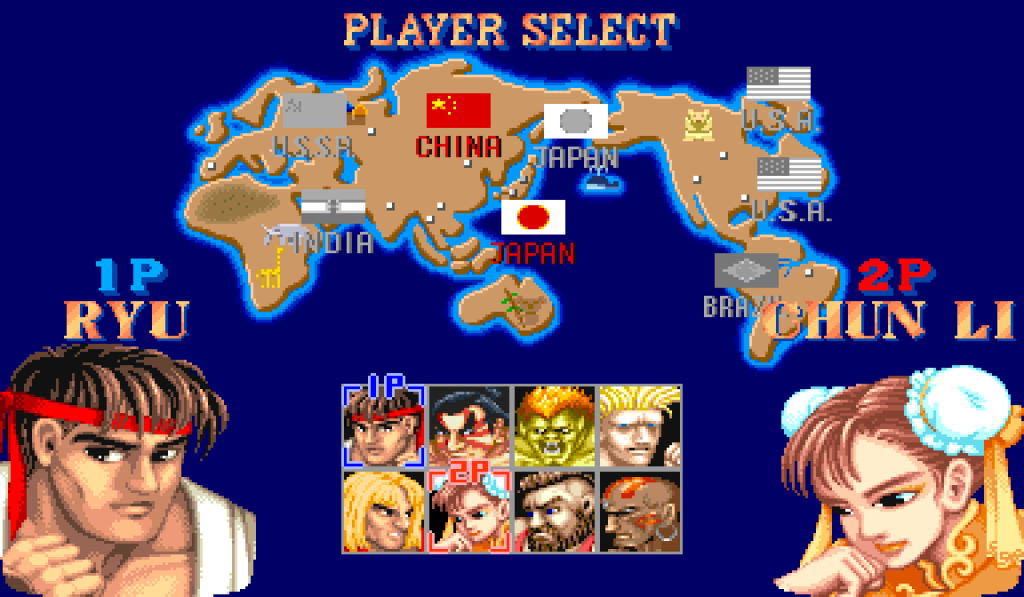
- Ryu: A Japanese karateka. He is based on Mas Oyama, specifically the depiction of him in the autobiographical manga Karate Baka Ichidai (1971). He is one of three returning characters from the original Street Fighter. Ryu is a wanderer who fights only for self-mastery.
- Ken: Also from Street Fighter hails Ryu’s best friend and rival. He is probably inspired by rich playboy characters like Top Gun (1986)‘s Maverick. He has some minute differences to Ryu but plays largely the same; the similarities are owed to Ken being the second player’s character in Street Fighter.
- Chun-Li: Almost certainly Flying Guillotine‘s Wu Chang Sang. Chun-Li wants to avenge her father’s death by the hands of the game’s villain. Chun-Li has gone on to be known as the “first lady of fighting games”, a title which I’m sure Star and Fan from Yie Ar Kung-Fu would protest to.
- Guile: Following in Chun-Li’s footsteps is the all-American army man, Guile. He also wants to avenge somebody, in this case a squadmate. There’s more than a little Jean-Claude Van Damme in him, as well as Rudol von Stroheim from JoJo’s Bizarre Adventure (1987).
- E. Honda: If the USA gets two representatives, so does Japan. Honda represents Japan’s more traditional side, being a sumo wrestler with kabuki make-up. His co-designer, Akira Yasuda, called on cultural stereotypes to make the characters stand out — he was allegedly influenced by Mickey Rooney’s character in Breakfast at Tiffany’s (1961) (yikes).
- Zangief: Victor Zangiev in all but one letter. Victor was a Soviet wrestler familiar to Japanese sports enthusiasts. Zangief’s ending features him Hopak dancing with Mikhail Gorbachev. No, really.
- Blanka: A feral man from the jungles of Brazil. He is based on Anabebe from Jungle King Tar-chan (1988) and was intended as an African fighter, although his concept art was… problematic. He can produce electricity from his body because of some mutation or whatever.
- Dhalsim: Directly inspired by Flying Guillotine‘s yogi fighter, extending limbs and all. The game’s designer, Akira Nishitani, claimed to have not seen this movie, but I refuse to believe that the artists weren’t familiar with it.
The game’s single-player mode takes you through a series of best-of-three matches against the characters you didn’t choose. Afterwards, four secret boss characters appear, who would become playable in the game’s later editions. Their names are a point of contention, as the international release decided to rotate three of the names:
- Sagat: A Muay Thai practitioner and the final boss from Street Fighter. He bears a scar on his chest from his previous encounter with Ryu.
- M. Bison (Japan) / Balrog (Overseas): A boxer modelled after Mike Tyson. You can see the issue here. He is referred to as Boxer in fan communities to avoid confusion.
- Balrog (Japan) / Vega (Overseas): A masked Spanish bullfighter with a claw who climbs a cage. Wow. His name is indirectly derived from the Lord of the Rings monster, as the name circulated in Japanese role-playing games at the time. He is referred to as Claw.
- Vega (Japan) / M. Bison (Overseas): The game’s psychokinetic final boss. A criminal syndicate leader with global ambitions. He is referred to as Dictator.
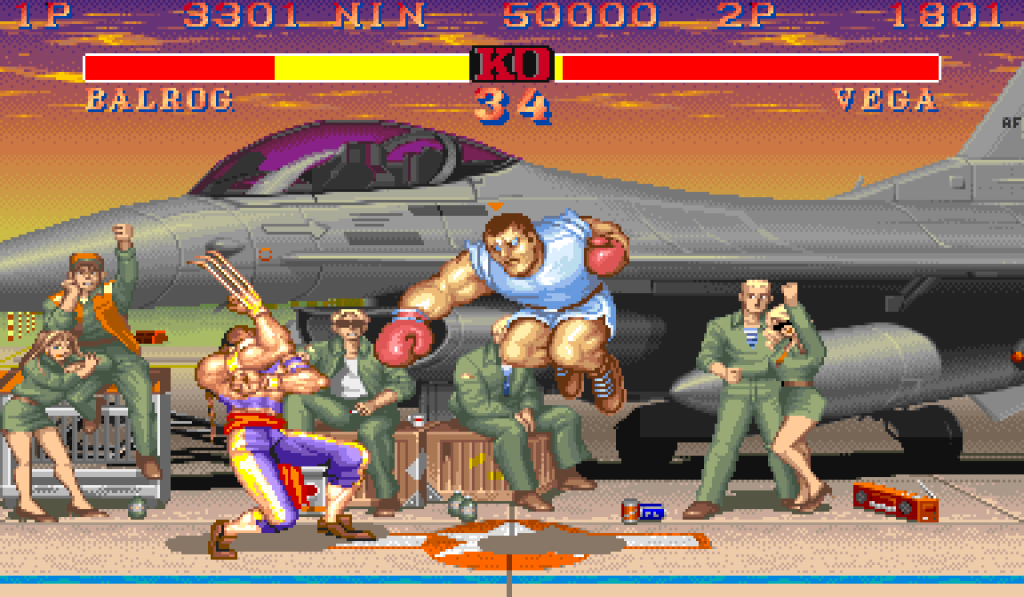
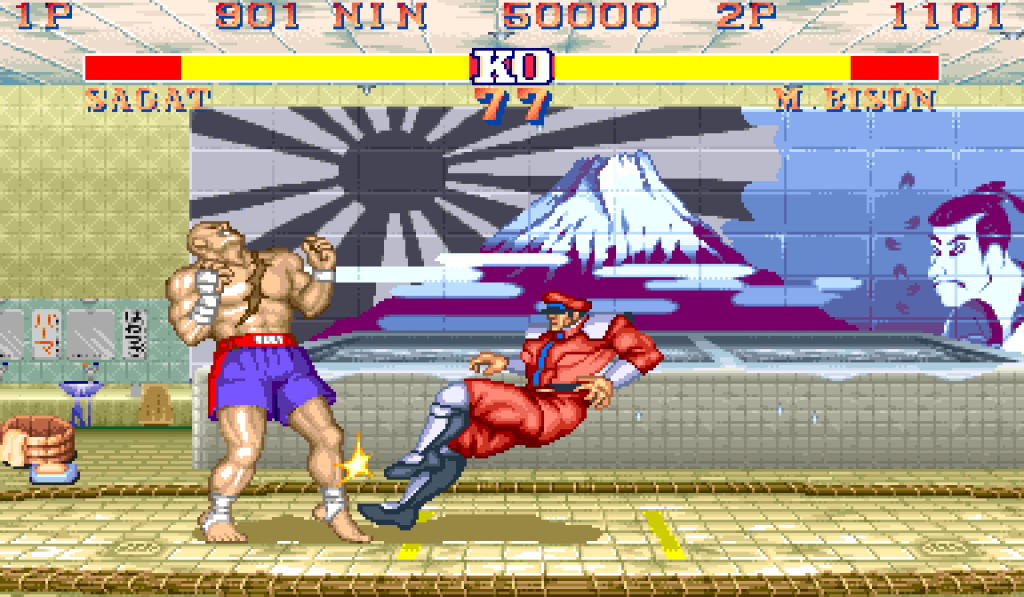
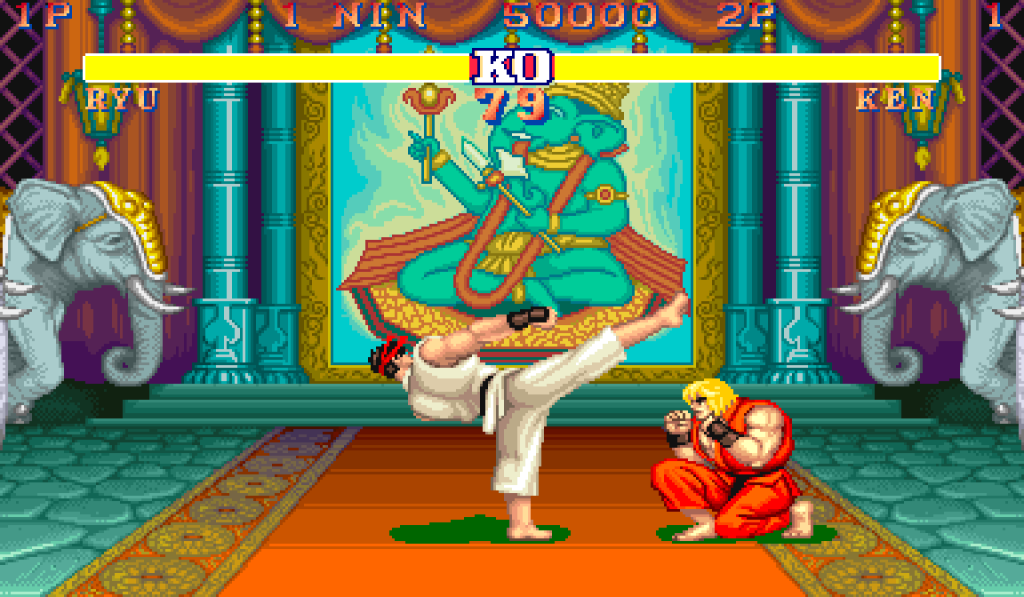
Before talking about any future characters that were added, we should first discuss the gameplay. Street Fighter II takes place on a two-dimensional plane. The field is roughly twice the width of the screen, with hard boundaries at each end. Characters can move in either direction, crouch and jump. Jumping grants a burst of speed and allows you to attack overhead, but you cannot alter your trajectory mid-jump.
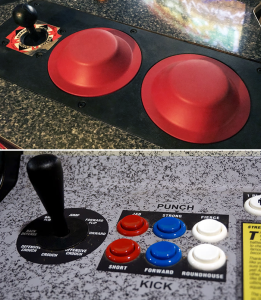
Street Fighter had two, large pneumatic buttons — one for punching, one for kicking — and three levels of “strength” for each. Street Fighter II trades this for a more comfortable six-button layout. All of the character animation frames include hitboxes that determine where they can deal or receive damage. Generally, kicks and stronger attacks reach further, but at the expense of speed. This distinction is important, as you can be punished for failing to land an attack.
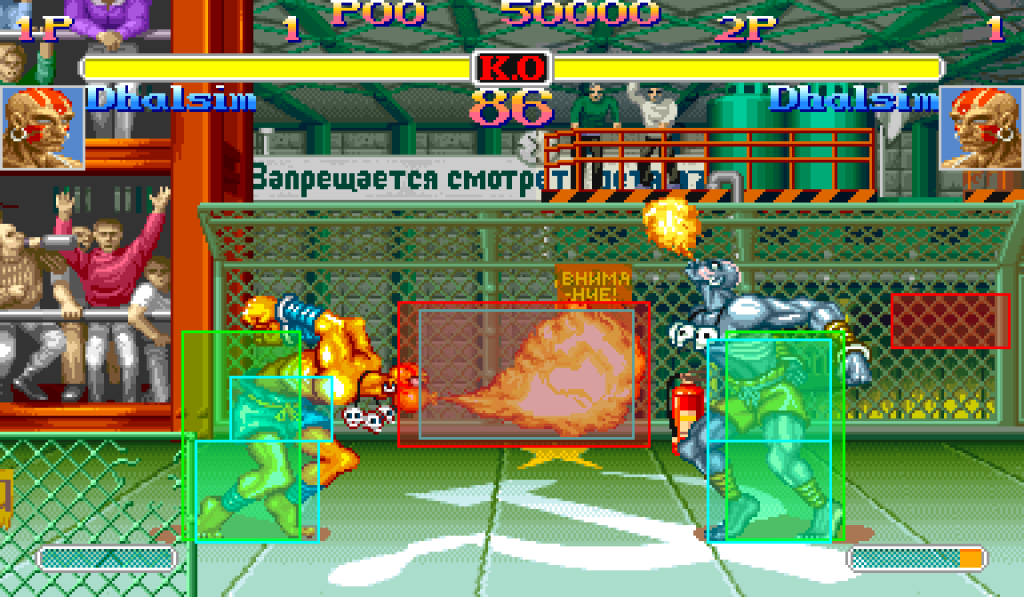
The basic gameplay loop occurs on the ground, as characters inch towards and away from each other, searching for openings while defending their own. Fighting game enthusiasts refer to this as “footsies”. A rookie mistake is assuming that special attacks are the key to victory, but footsies form the true foundation of high-level play.
Each character comes equipped with two or three special attacks, which give them control over a particular domain. Being the default character, Ryu’s three special attacks reflect the broad range of these gameplay styles, but he does not excel at any of them. Ryu’s iconic Hadōken gives him range in the form of a fireball, which can be used to pressure the opponent into a desirable distance. Likewise, his Shōryūken — a rising uppercut — serves as a punishment to those who approach him from above.
These moves are not intuitive to execute and it’s easy to scuff their input. This serves a dual purpose: both gameplay balance, and mastering them feels a lot like mastering a martial art.
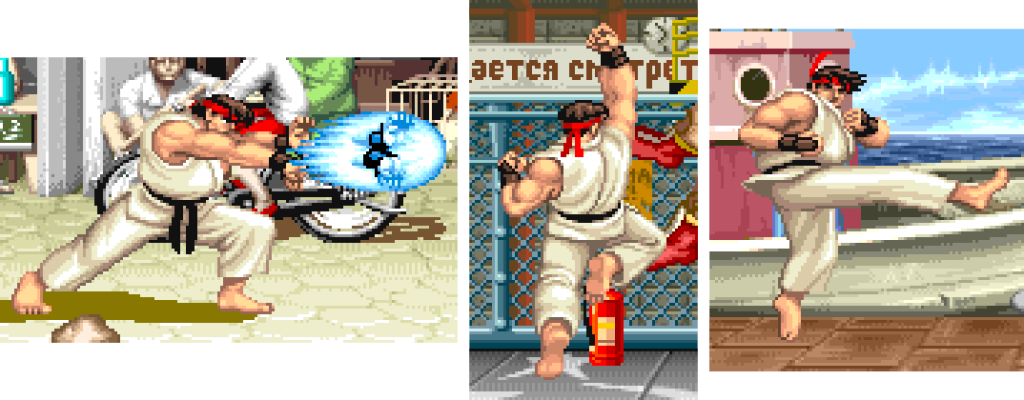
Fighting game fans have terms to describe the various character archetypes: Ryu and Ken are “shotokan” (“shoto” for short), all-rounders with balanced kits. Zangief is a “grappler”, trading manoeuvrability for power and stamina. Dhalshim is a “zoner”, focusing on ranged combat. Then there are others like “turtle”, “rushdown”, “rekka”, and so forth — the community tends to argue over what constitutes an archetype and what is simply a trait. Some are difficult to define, like Chun-Li, who doesn’t fit neatly into any of those boxes.
Another gameplay aspect which is now iconic to fighting games is “combos”, which actually started out as an accident: some animations will cancel into others, allowing you to perform a chain of attacks. This was canonised in the game’s first revision, Street Fighter II: Champion Edition (1992). Its next update, Street Fighter II Turbo (1992), was released (in the same year!) in response to unauthorised modifications of Street Fighter II.
Turbo increased the game’s playing speed and gave every character a new move… all except poor Guile.
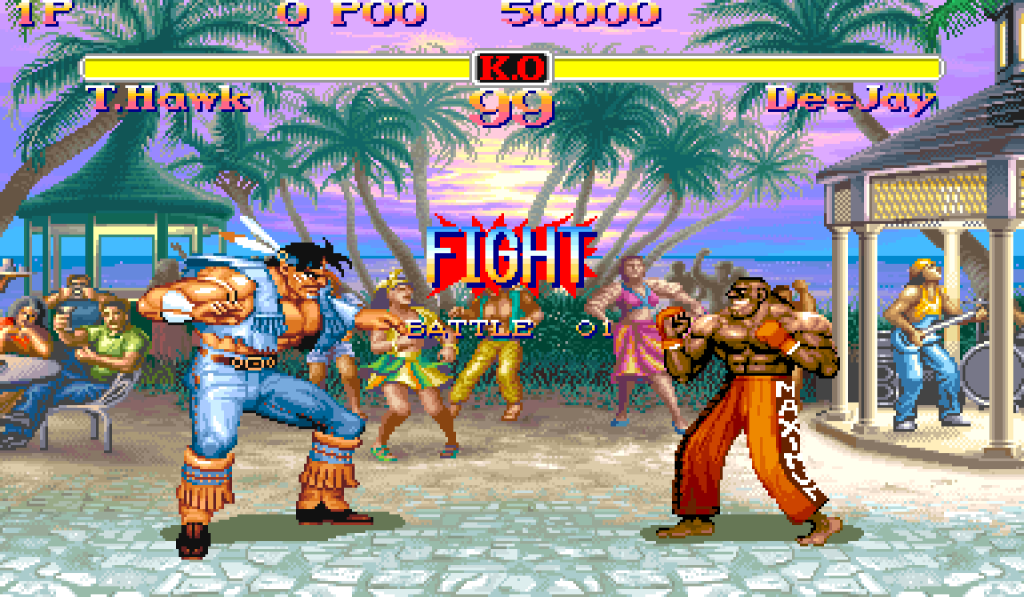
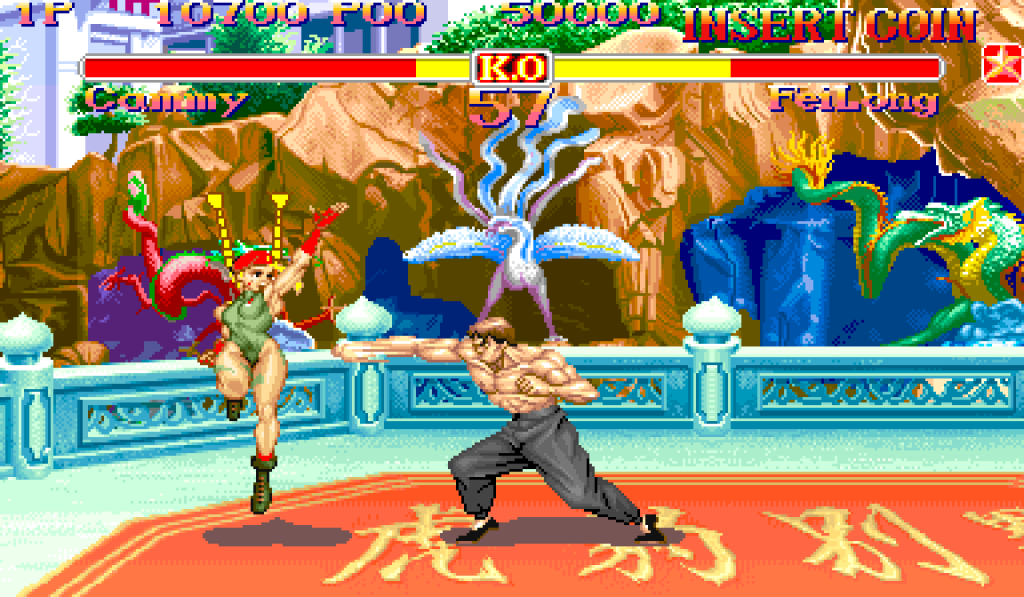
The first major update would be Super Street Fighter II: The New Challengers (1993). This ran on Capcom’s CPS-2 arcade board, which allowed for better graphics and sound. Besides aesthetic improvements, the game added numerous balance changes. Zangief especially benefitted from the improvements to throwing mechanics and the addition of his Banishing Flat attack, which finally let him deal with pesky fireballs. We also got four new characters:
- Cammy: An English special forces operative with ties to Dictator. She is based on Misty from Wounded Man (1982). The first prominent example of a “rushdown” character, a lightweight who overwhelms you with speed.
- T. Hawk: An indigenous warrior from Mexico. Like most characters, he is a pastiche of elements and not reflective of a particular tribe. He is the game’s second grappler after Zangief.
- Dee Jay: A Jamaican kickboxer. His trousers spell “MAXIMUM” vertically, which is clever, as the letters remain the same even when the character is flipped horizontally. He is the only character not designed by the Japanese staff and was modelled after Billy Blanks.
- Fei Long: Bruce Lee in all but name. It’s like Capcom learned nothing from Boxer. Unsurprisingly, legal reasons keep this character from returning in later games. He is the first “rekka” character in the genre, defined by special moves that can be repeated.
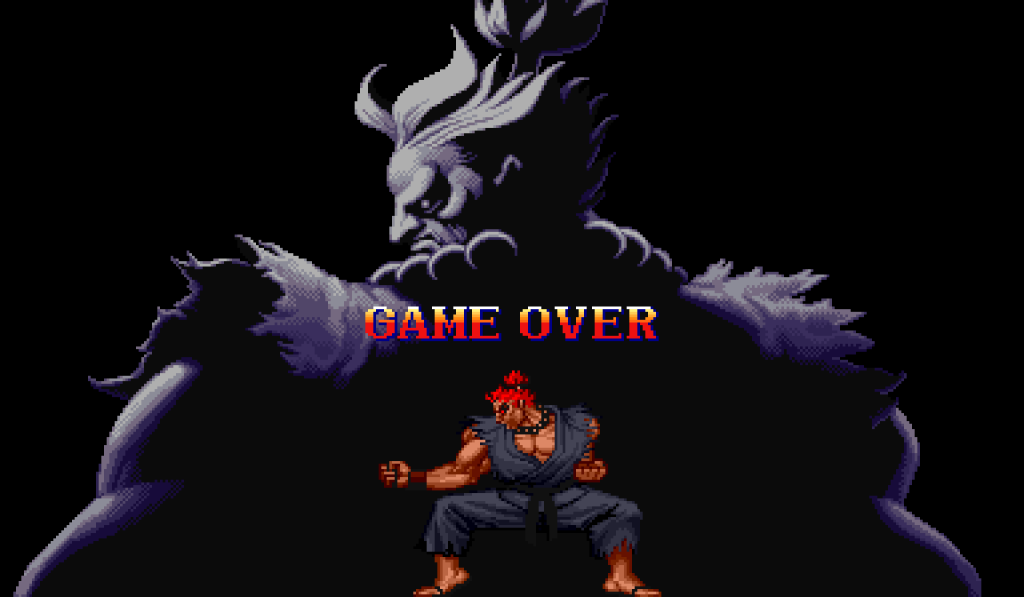
If you can believe it, it doesn’t end here: the game saw one more update, which reimplemented the turbo speed from Street Fighter II Turbo (1992) and added one final character. Super Street Fighter II Turbo (1994)‘s Akuma (Gouki in Japan) was inspired by a hoax in the magazine Electronic Gaming Monthly, which claimed that a secret character could be encountered by fulfilling ridiculous conditions.
Meeting Akuma requires you to reach the game’s ending in under 25 minutes without seeing the “Continue?” screen. If executed successfully, he will interrupt the match against Dictator and replace him as the game’s final battle. A secret input allows you to play as him, although he is functionally similar to Ryu and Ken.
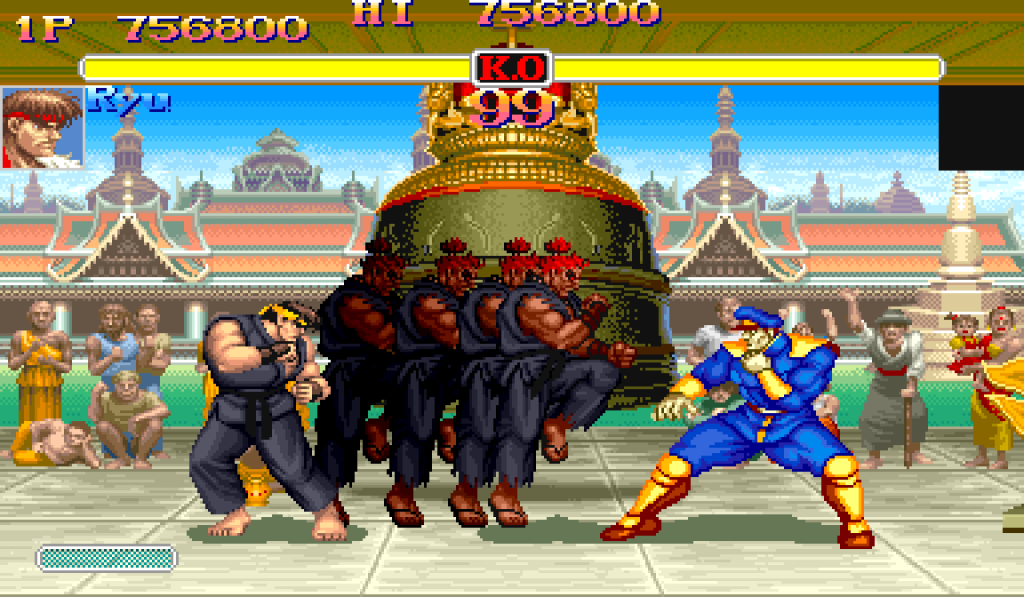
Super Street Fighter II: Turbo also added one more feature which would become a genre staple: super attacks (or “Super Combos” as they’re known here). These can only executed when a bar is filled up. They are immensely powerful, able to turn the tide of battle, but difficult to land and execute, as well as leaving you very vulnerable if avoided.
Street Fighter II made waves. It inspired numerous clones and competitors, such as Art of Fighting (1992), World Heroes (1992) and Mortal Kombat (1992). Before long, arcades became inundated with one-on-one fighting games and they remain a staple of arcade culture to this day.
You’d think Street Fighter II would feel dated by now, that its successors refined the formula so completely that the original would seem primitive by comparison. Yet somehow, that isn’t the case. Even today, modern fighting games still follow Street Fighter II‘s blueprint almost exactly. Even when the genre seems to wane in popularity, it always finds a way to return, proving that there is nothing so timeless as two people duking it out.
What? You can’t do a Hadōken? It’s ⬇️↘️➡️👊!